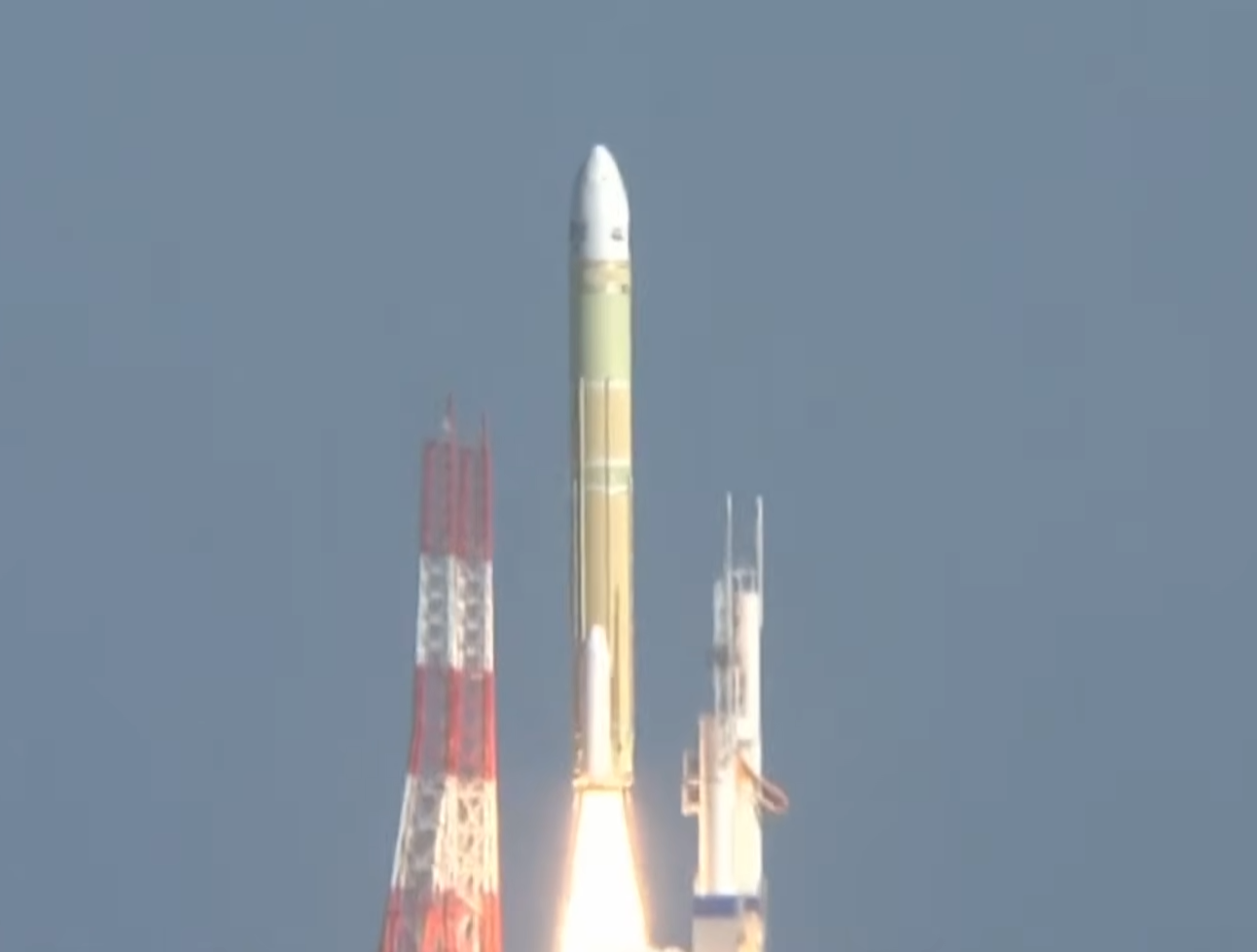
Japan's H3 rocket fails to put satellite into planned orbit
Accident Description
The Japan Aerospace Exploration Agency (JAXA) launched the H3 Rocket No. 8 from the Tanegashima Space Center in Kagoshima Prefecture on the morning of the 22nd, carrying the Quasi-Zenith Satellite “Michibiki” No. 5, part of Japan’s regional satellite positioning system. The rocket’s second-stage engine shut down prematurely during flight, and the satellite failed to reach its intended orbit, resulting in a failed launch.
Timeline
- Dec 23, 2025
JAXA Files First Situation Report
- Dec 25, 2025
JAXA released its preliminary investigation findings stating that the pressure of the second-stage liquid hydrogen fuel tank dropped sharply (to approximately 65% of the normal level) following fairing separation, which caused the engine to shut down prematurely. It was confirmed that the Michibiki No.5 satellite was lost, and the wreckage of the rocket and satellite re-entered the atmosphere in about four hours. The Cabinet Office officially confirmed the loss of the satellite. Investigation Report: https://www.mext.go.jp/content/20251225-mxt_uchukai01-000046593_002.pdf
- Jan 20, 2026
JAXA released its final preliminary investigation conclusions stating that the joint between the rocket and the satellite was damaged during fairing separation, which struck and impaired the pressurization pipeline of the liquid hydrogen fuel tank. A sustained drop in the fuel tank's pressure led to the premature shutdown of the second-stage engine. The satellite detached ahead of schedule during the separation of the first and second rocket stages and crashed into the Pacific Ocean along with the wreckage of the first stage. Source: https://202.238.231.237/content/20260120-mxt_uchukai01-000046812_0002.pdf
- Apr 13, 2026
JAXA Releases Final Investigation Report
Final Report
H3 Rocket Flight 8 (F8) Launch Failure Investigation Summary Failure Sequence Immediately following the fairing separation, the Payload Support Structure (PSS) suffered a total structural failure. As the PSS lost its load-bearing capacity, its upper section—along with the satellite—broke away under inertial forces and collided with the rocket's second stage. This impact damaged the liquid hydrogen (LH2) tank pressurization lines, leading to a drop in pressure, system anomalies, and the subsequent mission failure. Root Cause: PSS Manufacturing Defects The PSS utilizes a sandwich structure consisting of Carbon Fiber Reinforced Plastic (CFRP) skins bonded to an aluminum honeycomb core. The failure originated from quality control issues during the bonding process: Thermal Damage: During the bonding phase, localized heating temperatures exceeded design specifications, directly degrading the adhesive strength between the CFRP skin and the honeycomb core. Environmental Impact: Prior to bonding, the panels were stored in a high-temperature, high-humidity environment. Moisture absorption caused internal air and water vapor to expand during the heating process, exerting "peeling" force on the skins and creating initial delamination before the rocket even left the factory. Physical Failure Mechanism The shock loads generated by the fairing separation acted as the trigger. This shock caused the pre-existing internal delamination to expand rapidly, leading to localized buckling of the skin. Since the PSS is a primary load-bearing component, this local instability quickly escalated into a total structural collapse and fracture. Corrective Actions and Remediation Standard Rocket Models: The structural connection method for PSS panels will be transitioned from "adhesive bonding" to "mechanical fastening (bolting)" to physically eliminate risks associated with thermal damage during processing. Test Flight (F6): As the payload for this mission is relatively light (approx. 2 tons vs. the 8-ton design limit), a repair scheme will be implemented. This involves removing defective areas, injecting resin, and applying reinforcement patches, followed by rigorous strength verification. Cross-System Inspection: Other components using similar processes, such as the fairings, were inspected. While minor delamination was found, it remained within safety margins. Moving forward, JAXA will focus on overhaul and tightening its quality management systems.
If the information is incorrect or there are latest updates, please contact supervisor@spacelaunching.org