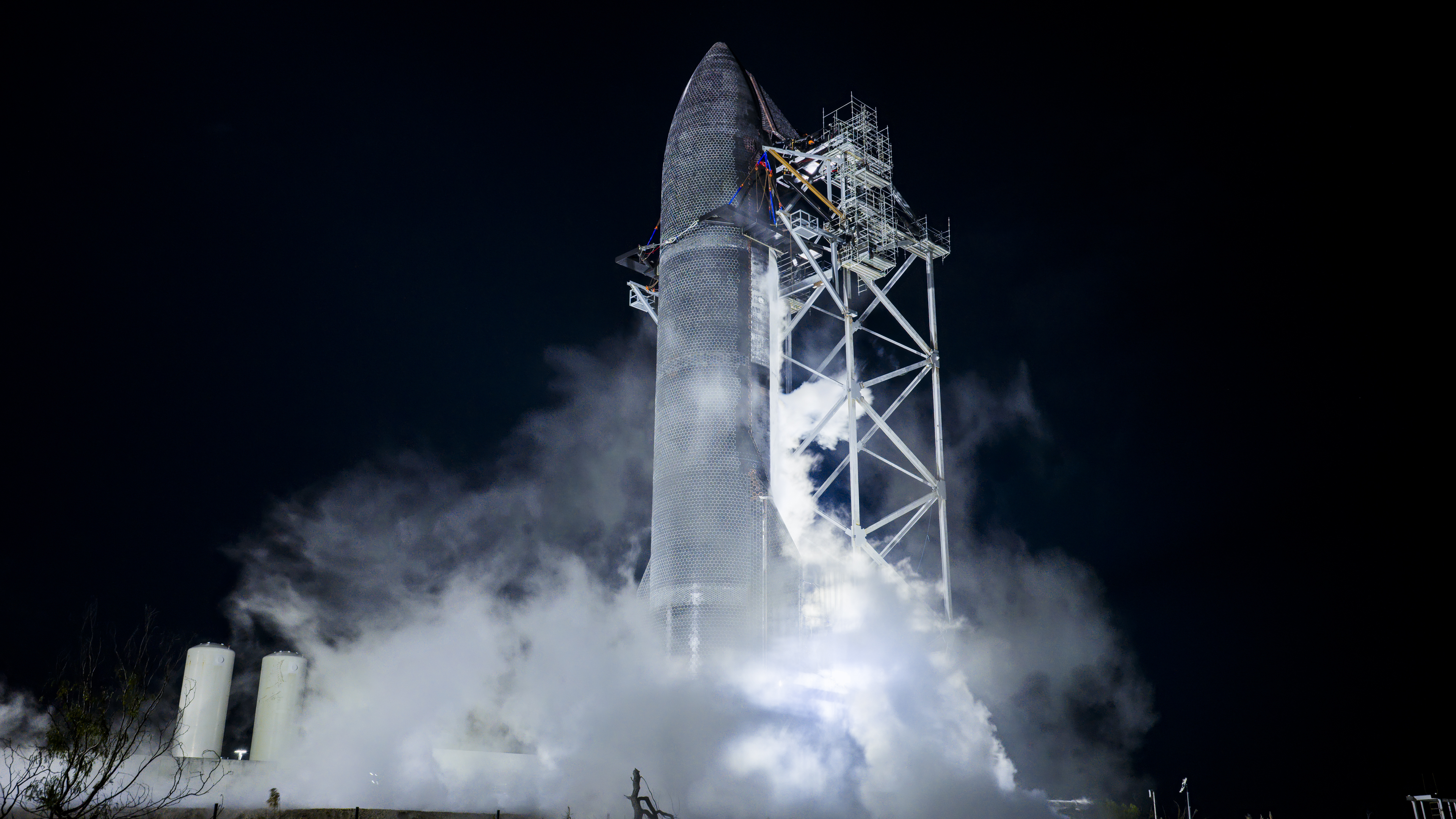
As the golden sunset over SpaceX’s Starbase in Texas fell on the stainless steel hull of Ship 39, with its black heat shield tiles glinting in the afterglow, SpaceX quietly completed a milestone test — the first cryoproof operations campaign for the next-generation Starship V3. This rigorous, multi-day test was not only Ship 39’s "debut assessment" but also marked the transition of the Starship V3 architecture from design drawings to practical validation, laying another solid foundation for humanity’s dream of marching to Mars.
What is Cryoproof Testing, and Why Is It Critical?
For Starship, which pursues ultimate performance and reusability, cryoproof testing is a "life-or-death test" that every prototype must pass. Simply put, the core of this test is to simulate the extreme low-temperature environment Starship will face during space missions: engineers fill Ship 39’s propellant tanks with liquid oxygen and liquid methane (liquid nitrogen is used in initial tests), monitor the tightness and structural stability of the tanks and pipelines throughout while maintaining a specific pressure, and check for any potential leakage or deformation hazards.
It’s important to note that during orbital flight and re-entry, Starship’s propellants will remain in an ultra-low temperature state for a long time. Any tiny structural defect or sealing issue could be amplified under extreme temperatures and pressures, ultimately leading to mission failure. The successful completion of multi-day cryoproof testing for Ship 39 means its redesigned propellant system is capable of withstanding the extreme conditions of space, building a solid safety barrier for subsequent key missions such as orbital flight and in-orbit refueling.
Beyond Cryoproof: Squeeze Tests Address the Core Challenge of "Tower Catch"
In addition to the cryogenic validation of the propellant system, another key focus of this test was structural strength testing — with the most notable being "squeeze tests." Unlike conventional structural strength verification, this test specifically simulates the enormous impact force that Starship will endure when grabbed by the "chopsticks" capture arms of the "Mechazilla" (Orbital Launch Integration Tower) during recovery.
Specifically, engineers applied precise pressure to the midsection and skirt of Ship 39 using hydraulic devices, simulating the instantaneous force scenario when Starship is clamped by the capture arms as it returns to Earth at 150 miles per hour. The difficulty of this test lies in the fact that Starship V3 adopts a slimmer hull design to improve payload capacity and reusability, while eliminating traditional landing legs and relying entirely on tower capture for recovery — placing far higher demands on structural strength than previous versions.
Ship 39’s successful passage of the squeeze tests not only verifies the rationality of its structural design but also confirms the reliability of the V3 architecture in the recovery phase — a key prerequisite for Starship to achieve the goal of "10+ rapid reflights" and another important breakthrough for SpaceX in advancing rocket reusability technology.
Starship V3: More Than an Iteration, a Complete Reconstruction
As the first prototype equipped with the Starship V3 architecture, the successful testing of Ship 39 is backed by a comprehensive upgrade of the V3 version. Compared with V2 and previous models, V3 is not a simple optimization but a complete reconstruction for "full reusability, large payload, and deep space missions." The core upgrade highlights include:
Propulsion System Innovation: Fully equipped with Raptor 3 engines, each with a thrust increased to 280-300 tons, about 20% more than the Raptor 2. At the same time, it is 1,100 kg lighter and eliminates the heat shield, greatly improving payload efficiency and manufacturability;
Propellant System Upgrade: The tanks have been optimized and expanded with internal tunnel pipes, adding 96 stiffeners. It can not only carry more propellants to support deep space missions but also cope with pressure impacts during low temperatures and capture;
Structural and Thermal Protection Optimization: The hull is slightly lengthened and overall slimmer, reducing flight vibration and structural stress; equipped with new ceramic heat shield tiles and improved flaps to solve the high-temperature ablation problem during previous re-entries;
Enhanced Reusability: Targeting 10+ rapid reflights, combined with tower capture technology, it will significantly reduce space transportation costs — the future orbital cost is expected to drop below $10 per kilogram, a 100-fold reduction compared to the current level.
Testing Complete, Next Stop: Flight 12 and the Deep Space Future
The successful completion of cryoproof testing and structural validation for Ship 39 marks the entry of Starship V3 development into a new phase. According to SpaceX’s plan, Ship 39 will next enter the engine installation and static fire test phase, and the Super Heavy Booster B19 paired with it has also completed its own cryoproof validation, preparing for subsequent integration tests.
More excitingly, the success of this test has made the timeline for Starship’s 12th flight mission (Flight 12) clearer. Elon Musk previously stated that Flight 12 is expected to launch in April 2026, which will be the first orbital flight test of Starship V3. The core goals include verifying the flight performance of the V3 architecture and testing in-orbit refueling capabilities, laying the foundation for subsequent lunar base construction and Mars unmanned exploration missions.
From the hop tests of the Starhopper prototype in 2019 to the mature validation of Starship V3 today, SpaceX has always promoted the boundaries of space exploration with the concept of "rapid iteration and bold experimentation." Every test and every breakthrough of Ship 39 is turning "Mars colonization" from science fiction into reality — it is not just a rocket prototype, but a "pioneer" for humanity’s march towards deep space industrialization. In the future, it will carry numerous missions such as satellite deployment, space manufacturing, and the construction of a cislunar economic circle, reshaping the way humans explore the universe.
Let’s wait for Ship 39’s next appearance and look forward to Starship V3 shining in Flight 12, writing a new chapter in human space exploration.