Stunning Amateur Footage Captures China's Tiangong Space Station Crossing the Moon
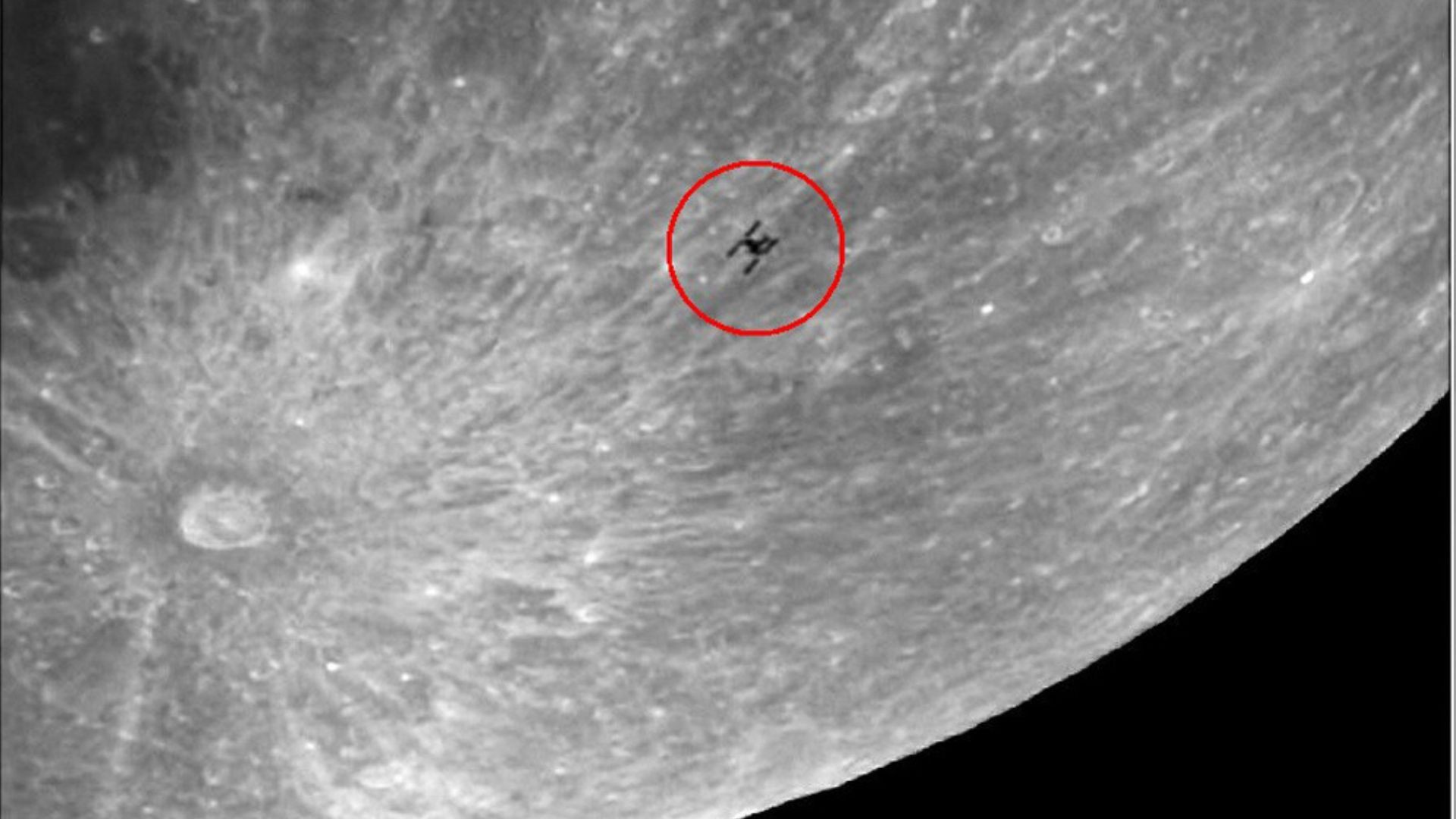
Astrophotographer Efrain Morales from Puerto Rico has captured spectacular footage of China's Tiangong space station as its silhouette crossed Tycho Crater during a lunar transit on May 29, one night before May's Blue Moon.
Split-Second Precision
Morales recorded the outlines of Tiangong's solar panels and habitable modules using a 12-inch telescope and astronomy camera as the station passed silently across the lunar surface at 11:33 p.m. EDT (0333 GMT on May 30).
"It is a challenge in less than a second to capture this event," Morales said in an email to Space.com. "Using a program the ISS Transit Finder helps in giving information to capture the space station. Adjusting the FOV and at times calculating last-minute deviations in time and positions in which makes it more challenging."
A Dramatic Lunar Backdrop
The orbital outpost appeared to dive directly toward Tycho Crater, whose 53-mile-wide (85-kilometer) impact site and bright ejecta dominate the southern region of the lunar disk on nights surrounding the full moon phase.
The dark expanses of Mare Nubium (the Sea of Clouds) and Mare Nectaris (the Sea of Nectar) can also be seen on the lunar disk, where ancient lava flows hardened to form basaltic plains billions of years ago.
The Tiangong Space Station
The Tiangong space station, which translates to "Heavenly Palace" from Mandarin, consists of the core module Tianhe and the Mengtian and Wentian laboratory modules. The station orbits Earth at an altitude ranging between 217 and 280 miles (340 to 450 km).
Tiangong is currently crewed by the three taikonauts of the Shenzhou 23 mission—commander Zhu Yangzhu, pilot Zhang Zhiyuan, and payload specialist Lai Ka-ying—who launched to the station atop a Long March 2F rocket on May 24.
Expansion Plans
China has announced plans to double the size of Tiangong from three to six modules. The Xuntian space telescope is scheduled to launch first in 2027, operating in a co-orbital configuration with the station.