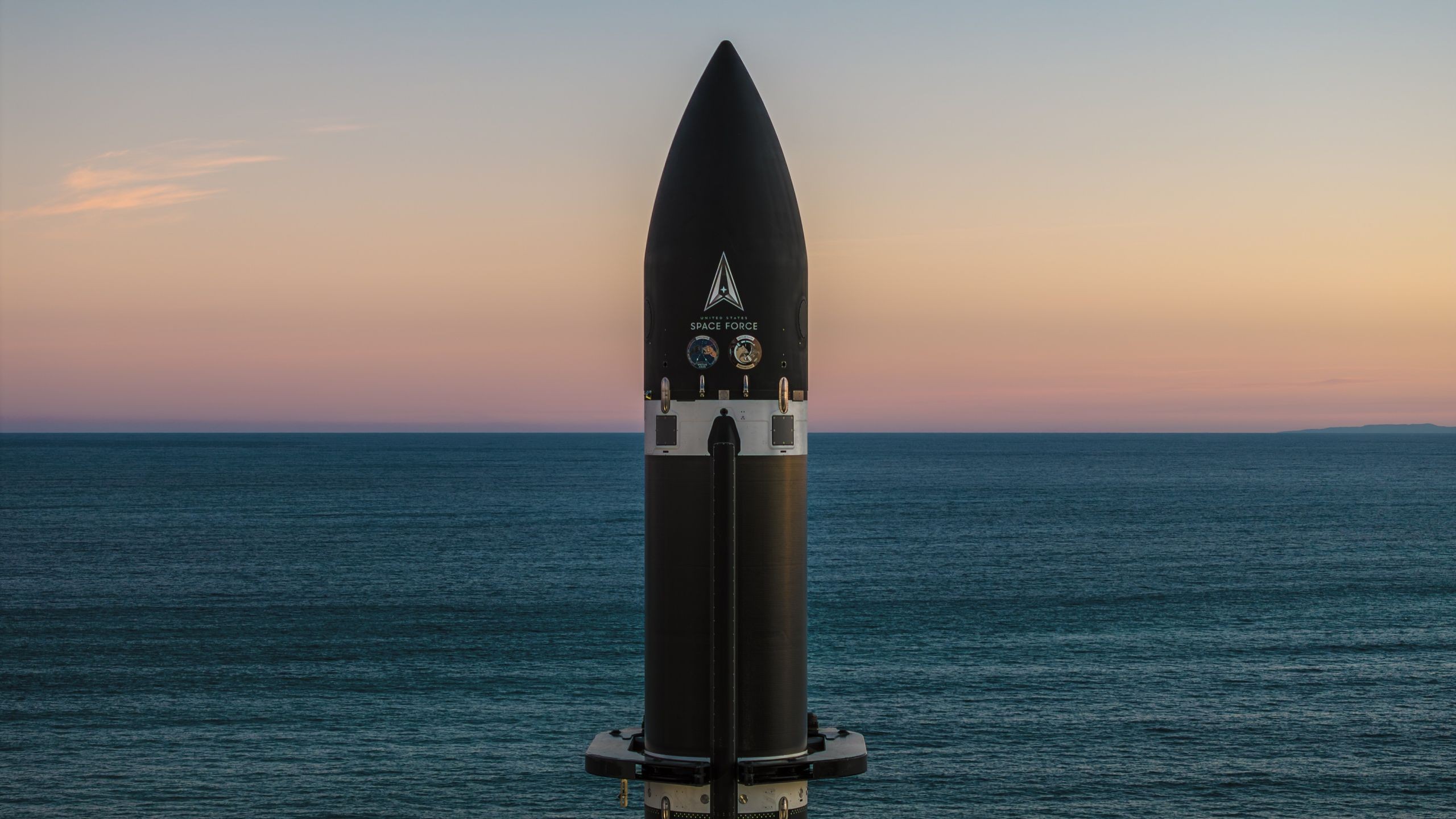
The U.S. Space Force has declared its "Victus Haze" tactically responsive space mission a success, completing the service's first tactical intercept of an orbital target using two commercially built spacecraft.
The mission involved True Anomaly's JACKAL-0004 satellite, launched aboard a SpaceX Falcon 9 in May, and Rocket Lab's Pioneer-class Puma vehicle, which reached orbit on June 19 aboard an Electron rocket. Rocket Lab broke an internal record on that flight, delivering Puma to space just 16 hours and 42 minutes after receiving the launch notice.
Once both spacecraft were in orbit, Space Systems Command set a 72-hour deadline for the orbital engagement. According to a True Anomaly statement, JACKAL executed precise propulsion burns, achieved closed-loop tracking of Puma, conducted precision pointing and imaging, and characterized the target before egressing to its base orbit. The entire sortie was completed 11 hours ahead of schedule.
During mission operations, True Anomaly handed control of JACKAL to its "space superiority software" called Mosaic, which autonomously planned the rendezvous and engagement sequence with Puma. Rocket Lab's Pioneer platform handled Puma's design, launch, and operations.
Victus Haze is the Space Force's second Tactically Responsive Space (TacRS) mission, following Victus Nox in September 2023, which focused on space domain awareness capabilities. This latest demonstration takes the concept a step further by executing an active in-orbit engagement between two spacecraft.
"Victus Haze proves that responsive launch and responsive characterization are a single capability. Acquire a new object within hours, close the geometry, and deliver the imagery. The next step is cadence: faster, more often, and across more orbits," True Anomaly stated.