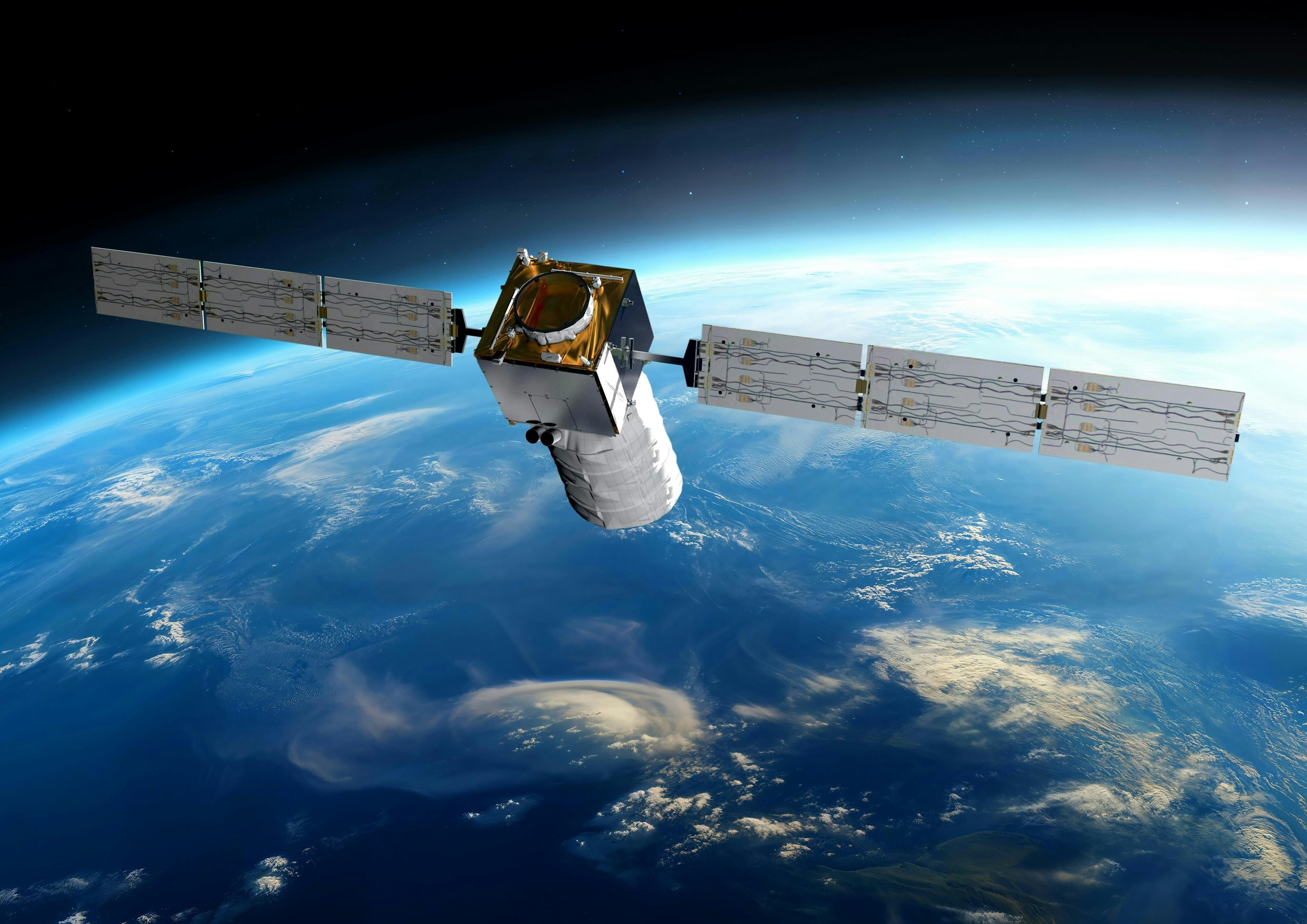
ESA Taps Airbus to Build Aeolus-2, Turning Wind Monitoring Into an Operational Reality
The European Space Agency has given Airbus Defence and Space the green light to begin work on Aeolus-2, the successor to the satellite that proved it was possible to measure global wind profiles from orbit. The initial development contract is worth 51 million euros, an Airbus spokesperson confirmed.
The original Aeolus, launched in 2018, was a pathfinder. Its ultraviolet lidar instrument — notoriously difficult to develop — ended up exceeding performance expectations during nearly five years of operations before the spacecraft reentered the atmosphere in 2023. The data it collected fed into weather models at the European Centre for Medium-Range Weather Forecasts and demonstrated that space-based wind lidar could fill a critical gap in the global observing system.
Aeolus-2 aims to turn that demonstration into a permanent operational capability. The spacecraft will carry two lasers, each twice as powerful as the original, with an upgraded and more robust instrument design drawing on lessons from both Aeolus and the EarthCARE mission launched in 2024. The lidar will collect wind profile data from the surface to an altitude of 30 kilometers every hundredth of a second, achieving full global coverage every seven days. An additional instrument will measure atmospheric aerosols.
"Building on the lidar heritage of both Aeolus and EarthCARE, Aeolus-2 will carry two lasers, each twice as powerful as Aeolus's, with an upgraded and more robust instrument design capable of reliably delivering the high-quality wind data that operational meteorological services require," said Ben Boyes, ESA's project manager for Aeolus-2.
The most significant shift from the original mission is institutional: Aeolus-2 is designed from the start for operational use by Eumetsat, the European weather satellite agency, with its data flowing directly into numerical weather prediction models. Its predecessor was fundamentally a research mission that happened to produce operationally useful data.
Airbus, which was also the prime contractor for the original Aeolus, will build the satellite at its facilities in the United Kingdom. "Aeolus-2 will deliver real benefits for people across the UK, from more accurate weather forecasts that protect lives and communities, to the highly skilled jobs that come from being a key partner in Europe's most ambitious space science programs," said Liz Lloyd, the UK space minister.
ESA is now targeting a 2034 launch for Aeolus-2, a notable shift from earlier plans that envisioned a two-satellite constellation launching by the end of this decade. The agency has not publicly detailed the reasons for the descoped and delayed timeline, though budget and technical readiness assessments likely played a role. For industries that depend on weather forecasting — shipping, agriculture, aviation — the wait until 2034 will be long. But the original Aeolus showed that watching the wind from space is worth the patience.