China launched two batches of satellites for its Qianfan broadband constellation on consecutive days this week, marking a significant acceleration in the deployment cadence of one of the country's most ambitious commercial space projects.
On July 4 at 17:30 Beijing time, a Long March 6A rocket lifted off from the Taiyuan Satellite Launch Center, carrying the Qianfan Polar Orbit Group 13 satellites into their designated orbit. The mission was the 655th flight of the Long March rocket series.
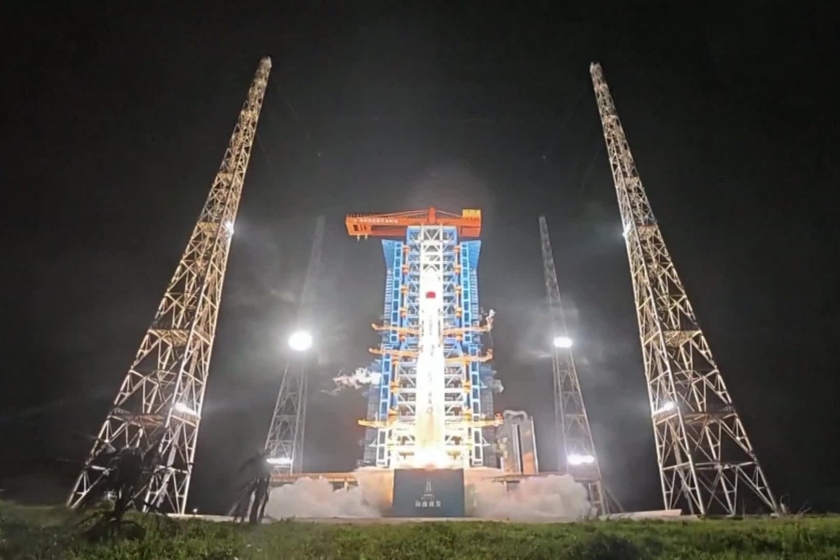
Less than 29 hours later, at 21:43 Beijing time on July 5, a Long March 8A rocket roared off the pad at the Hainan Commercial Launch Site, successfully deploying the Polar Orbit Group 15 satellites.
The back-to-back launches from two different spaceports — Taiyuan in the north and Hainan in the south — signal that the Qianfan constellation has entered a phase of high-frequency deployment. The use of the Hainan Commercial Launch Site for the Long March 8A mission also underscores the growing maturity of China's commercial launch infrastructure.
The Qianfan constellation is China's answer to low-Earth-orbit broadband megaconstellations, aiming to deliver global high-speed satellite internet coverage. The polar-orbit groups are designed to cover high-latitude regions and the poles, complementing inclined-orbit satellites to achieve truly global coverage.
As the launch cadence shifts from monthly to back-to-back daily missions, the constellation's operational capacity could begin to materialize within the next year. The ability to coordinate multiple rocket types across multiple spaceports will be critical to maintaining this tempo.