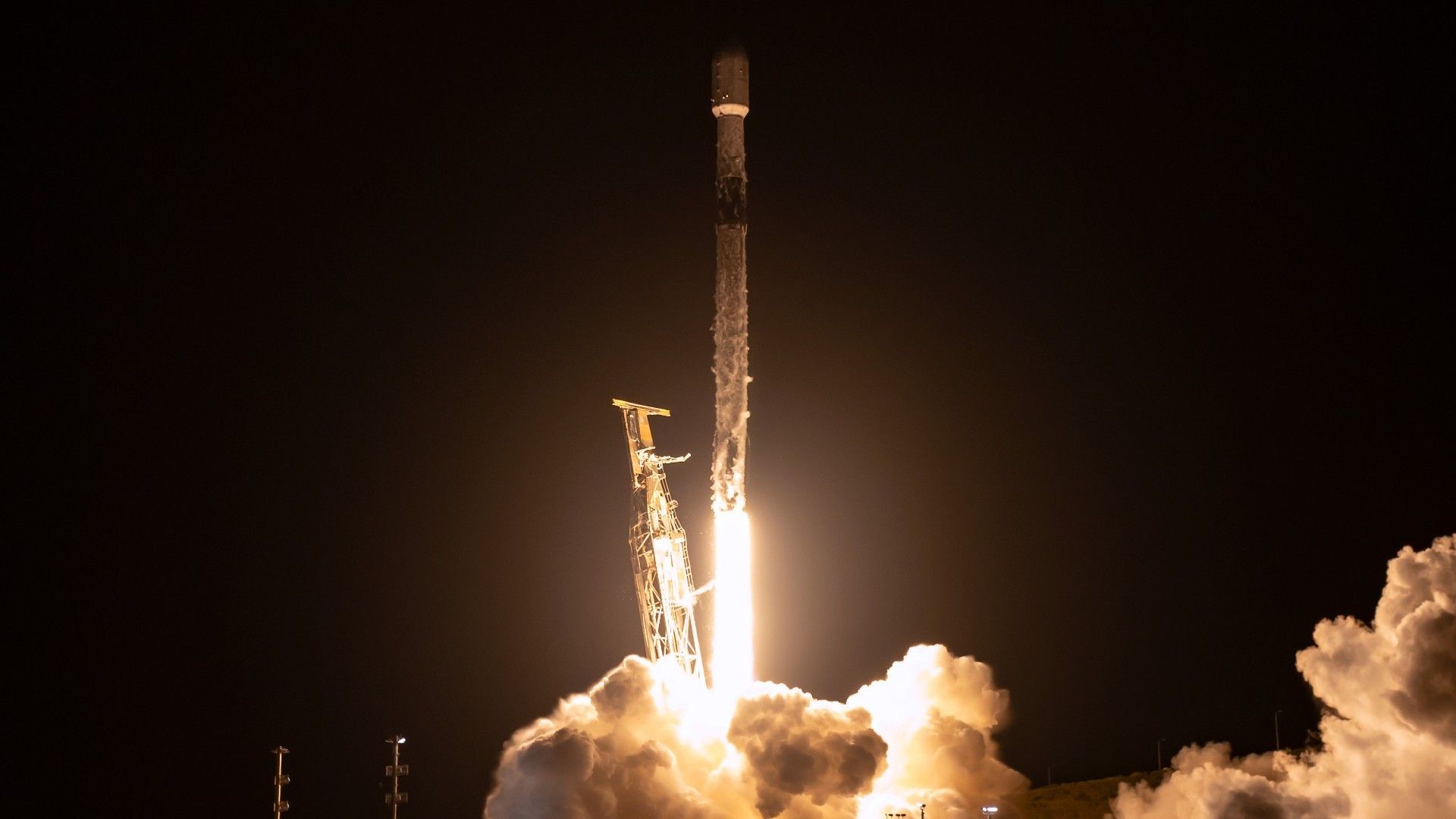
SpaceX is preparing to launch 81 payloads into low Earth orbit early Tuesday morning, July 7, on the Transporter-17 rideshare mission — the largest single rideshare of 2026 so far.
A Falcon 9 rocket is scheduled to lift off from Vandenberg Space Force Base in California at 3:10 a.m. Eastern time, during an 18-minute launch window. The mission will carry a diverse mix of cubesats, microsats, hosted payloads, and orbital transfer vehicles, eight of which will deploy their payloads at a later time.
The heaviest single payload aboard is CAS500-4, a South Korean Earth-observation satellite weighing roughly 500 kilograms. The spacecraft, part of a planned five-satellite fleet, will support crop and forest monitoring for the South Korean government.
Transporter-17 marks the 17th mission in SpaceX's dedicated smallsat rideshare series. Combined with the related Bandwagon program, SpaceX has now flown 20 rideshare missions, delivering more than 1,800 payloads to orbit since Transporter-1 set the single-launch record of 143 satellites in January 2021 — a record that still stands.
The Falcon 9 first stage flying this mission is making its 11th flight. About eight and a half minutes after liftoff, it will attempt a landing on the droneship "Of Course I Still Love You" stationed in the Pacific Ocean. The upper stage will begin deploying payloads roughly 50 minutes into the flight, with CAS500-4 scheduled for release nearly two and a half hours after launch.
Transporter-17 will be SpaceX's 79th Falcon 9 mission of 2026. Nearly 80 percent of the company's launches this year have been dedicated to building out the Starlink broadband constellation.