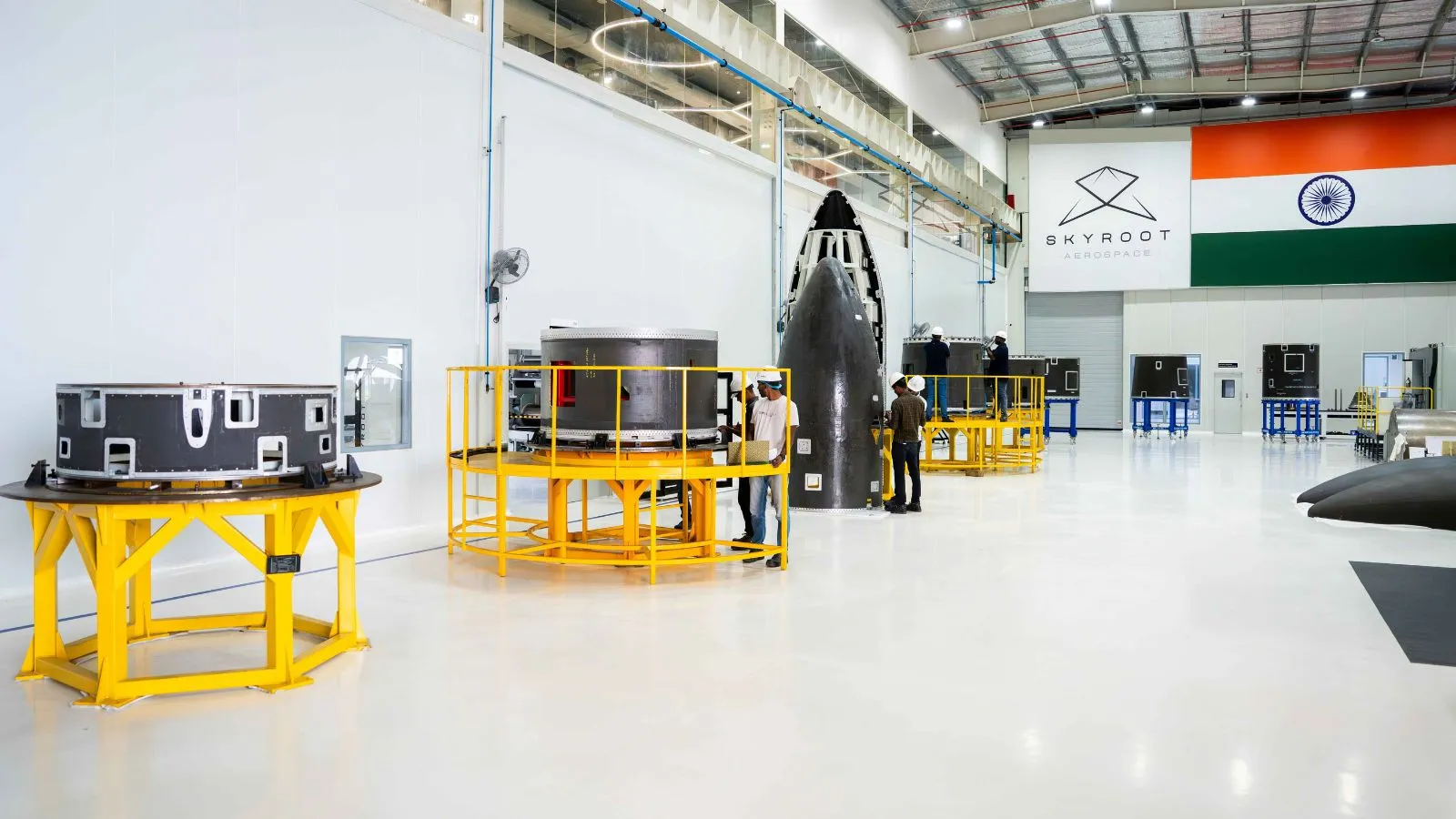
Indian launch startup Skyroot Aerospace has positioned its Vikram-1 rocket on the pad at the Satish Dhawan Space Centre, targeting a first orbital launch attempt as soon as July 12.
The mission, named Aagaman, is primarily a test flight of India's first privately developed orbital launch vehicle. It will carry several cubesats and hosted payloads from domestic and international customers, targeting a 450-kilometer orbit at 60 degrees inclination. The launch window extends through August 4.
Vikram-1 is a four-stage rocket using solid motors for the lower three stages and a liquid-propellant kick stage, capable of lifting up to 350 kilograms to low Earth orbit. The company previously tested core technologies with the Vikram-S suborbital rocket in 2022.
"With Vikram-1, we take our biggest step yet toward a reliable, high-cadence launch program built in India, for India and the world," said Naga Bharath Daka, co-founder and chief operating officer.
Skyroot has benefited from India's space policy reforms, gaining access to ISRO test stands and launch infrastructure. The company raised $60 million in May at a $1.1 billion valuation. It plans up to two more Vikram-1 launches this year and is developing the upgraded Vikram-1U with strap-on boosters, targeting a first quarter 2027 debut.
"The launch vehicle has to be reliable. Everything else only comes after reliability," said Pawan Kumar Chandana, Skyroot CEO.