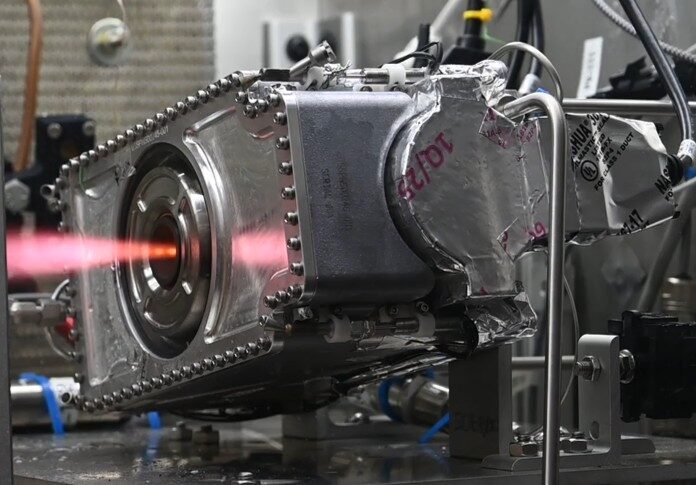
Parabilis Tests Hybrid Propulsion System for Maneuverable Cubesats
California-based propulsion startup Parabilis Space Technologies announced July 11 that it has completed hot-fire testing of its Dense Orbital Transfer System (DOTS), a 2U propulsion module roughly the size of a household toaster. The system uses a hybrid engine that combines solid fuel with a liquid oxidizer, an approach that aims to give small satellites something most of them currently lack: the ability to maneuver in orbit.
Small satellites have become a staple of military space programs because they are inexpensive and quick to build. But most cubesats, once deployed, have little or no ability to change their orbit. They drift along until atmospheric drag pulls them down, unable to avoid debris, adjust altitude, or perform coordinated formation flying.
DOTS seeks to change that. Its hybrid propulsion design blends the storage advantages of solid propellants — stable, long shelf life, no maintenance — with the controllability of liquid systems, enabling restart capability and precise thrust adjustments. The engine also features a "cold start" capability, eliminating the warm-up time typically required before firing, which allows operators to respond more quickly to changing conditions in orbit.
The Space Systems Command described DOTS as a "novel application of heritage space propulsion technology" in a news release announcing the test. The command noted that maneuverability would allow small satellites to avoid orbital debris, maintain formations, reposition for new missions, and operate in very low Earth orbit, where higher atmospheric drag is offset by improved imaging resolution and communications performance.
Parabilis CEO Enrico Attanasio said DOTS "delivers a clear leap in cubesat propulsion performance."
With ground testing complete, the company is now looking to demonstrate the technology in orbit. "Both government and industry partners have expressed interest in partnering on a flight test," a company spokesperson said. "Once we have a definitive partner, we could be ready to fly in less than one year."