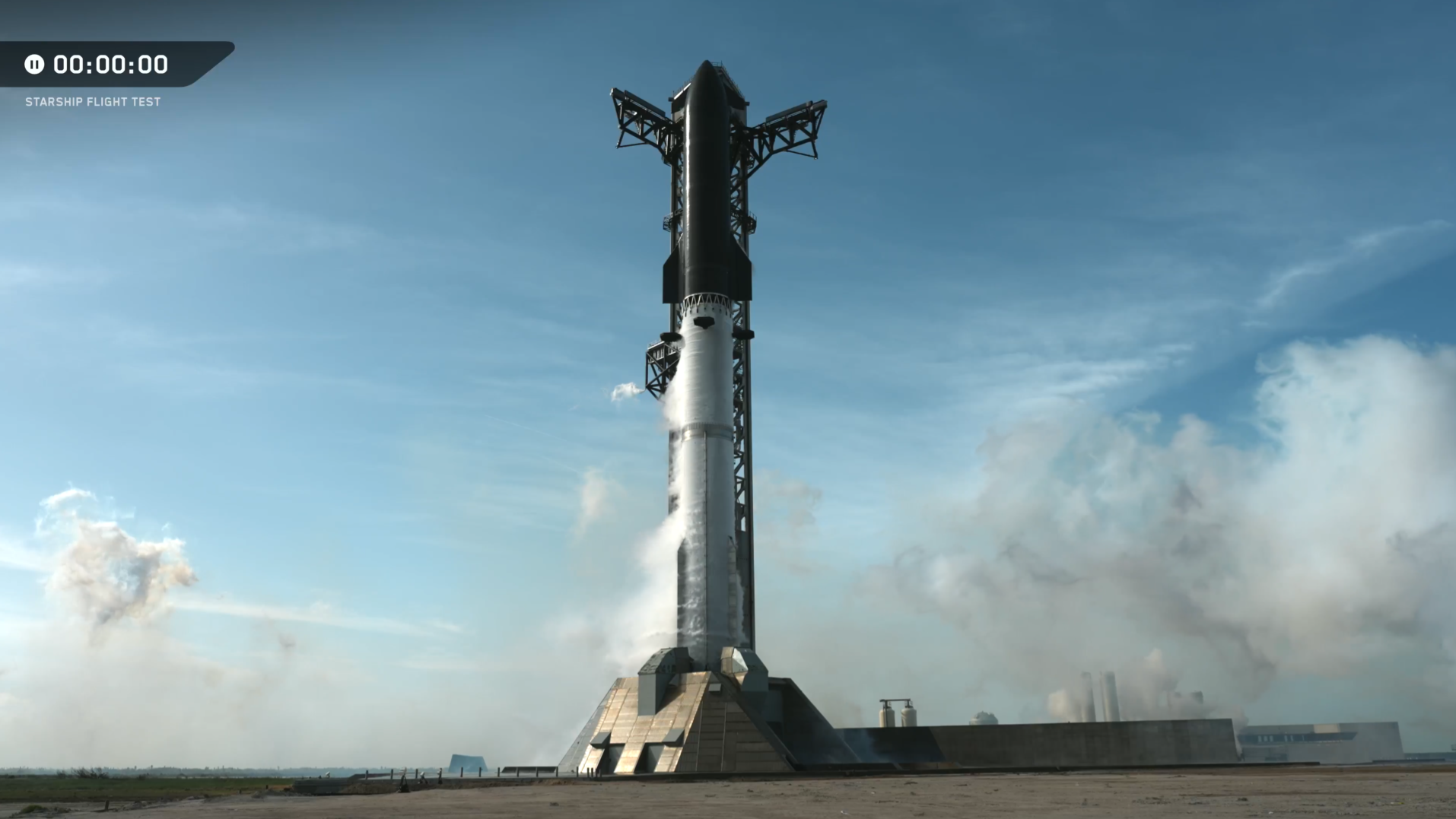
SpaceX Starship Flight 13 Aborts at T-0 as Raptor Engines Fail to Ignite
SpaceX's Starship Flight 13 was aborted at T-0 on July 16 when multiple Raptor engines on the Super Heavy booster failed to ignite during the launch attempt at the company's Starbase facility in Texas.
The launch was scheduled for 6:45 p.m. Eastern Time, but the automatic abort sequence triggered just as the engines began their ignition sequence. "Some of the engines didn't start, triggering an automatic launch abort," SpaceX CEO Elon Musk posted on social media minutes after the abort. He later confirmed that two Raptor engines would be removed and replaced, with the next attempt likely coming early next week.
Flight 13 was the second flight of the upgraded Starship V3 configuration and marked SpaceX's first launch attempt since going public on the Nasdaq on June 12. The mission was set to fly a similar suborbital profile as Flight 12, but with a notable payload change: the upper stage carried 20 functional Starlink V3 satellites, marking the first time SpaceX has flown operational payloads on a Starship test flight.
During the brief planned suborbital flight, the satellites were to undergo about 20 minutes of testing, including solar array and antenna deployment, as well as communications tests with ground stations and other Starlink satellites. The Starlink V3 satellites represent a significant upgrade over the current V2 generation, with each satellite providing 1 terabit per second (Tbps) of downlink capacity — 10 times better than existing satellites — and 160 gigabits per second (Gbps) of uplink capacity, 22 times better. They also feature upgraded phased-array antennas and backhaul antennas operating on Ka-, E-, V-, and W-bands.
The abort came at a sensitive time for SpaceX's stock performance. Shares, which closed at $131.11 that day — below the IPO price of $135 for the first time — dropped from about $132 to nearly $125 in after-hours trading within five minutes before partially recovering to $127.
Flight 12 on May 22 experienced issues including the Super Heavy booster failing to perform a controlled splashdown in the Gulf of Mexico and the loss of one of six engines on the Starship upper stage during ascent. SpaceX had incorporated changes for Flight 13 in response to those issues, but the abort prevented the vehicle from demonstrating those improvements.
Further Reading
Original article: https://spacenews.com/spacex-aborts-starship-flight-13-launch-attempt/