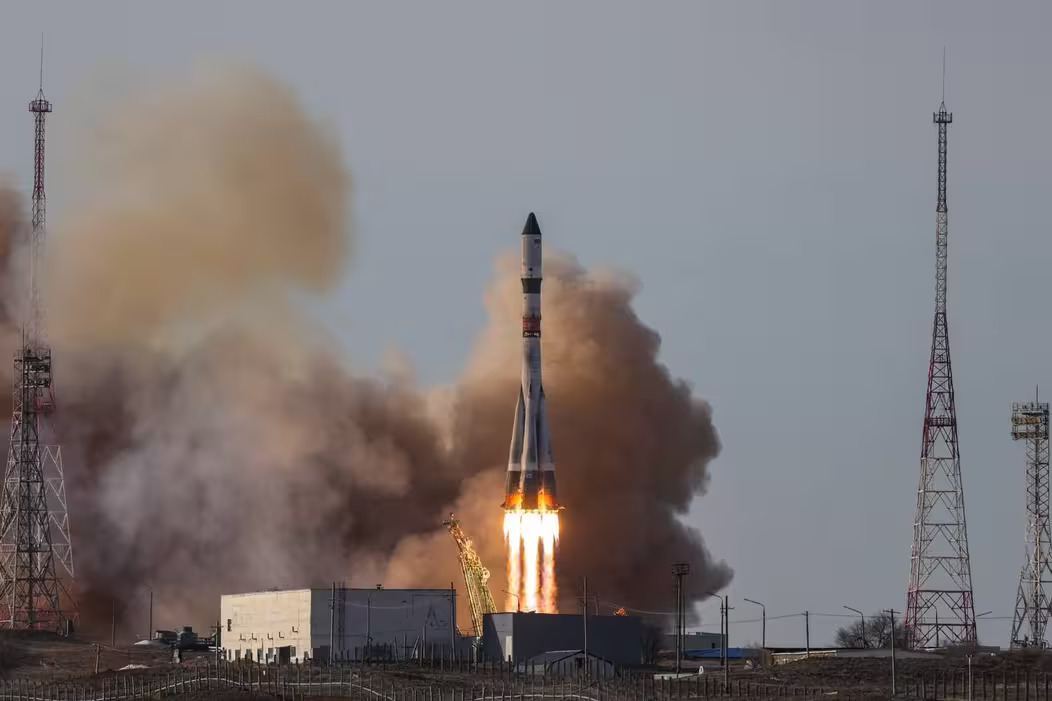
At precisely 11:59 UTC on March 22, 2026, Roscosmos (the Russian State Space Corporation) lifted the Progress MS-33 cargo spacecraft into orbit, marking a critical return to flight for the LC-31/6 launch pad at Baikonur Cosmodrome in Kazakhstan. The mission, delayed nearly four months by ground infrastructure damage, restores steady logistics support to the International Space Station (ISS) and delivers key scientific hardware for long-duration orbital research.
A Resilient Return to Launch Operations
This launch carries more than routine operational significance: it represents the full restoration of a key Russian launch complex following a high-profile incident last year. On November 27, 2025, improper crew procedures during the Soyuz MS-28 crewed launch caused a collapse of the mobile platform structure beneath LC-31/6, inflicting severe damage that forced Roscosmos to pause launches from the site.
The setback pushed the Progress MS-33 mission—originally scheduled for December 21, 2025—into a multi-month delay, requiring careful re-planning of ISS supply chains and crew support. After extensive repairs and safety verification, LC-31/6 has now been cleared for operational use, with the Soyuz-2.1a rocket performing flawlessly on its return-to-flight mission.
Mission Cargo: Over 2.5 Tons of Supplies & Scientific Payload
Progress MS-33 is carrying a total payload of more than 2.5 metric tons to the ISS, split between station maintenance, crew provisions, and experimental hardware. The manifest breaks down as follows:
Station upkeep & hardware: 393 kg of components for ISS system repairs and maintenance
Scientific equipment: 52 kg of experimental gear, plus a flagship 47 kg solar radio telescope
Crew supplies: 619 kg of food, 135 kg of hygiene items, 12 kg of medical kits (including specialized countermeasure suits to mitigate microgravity effects)
Fluids & life support: 828 kg of propellant for station refueling, 420 kg of drinking water, 50 kg of oxygen
The standout scientific payload is the Solntse-Tragets solar radio telescope, developed by the Lebedev Physical Institute. Weighing 47 kg and equipped with eight detection instruments, the telescope is designed for at least two years of continuous solar monitoring. Astronauts will conduct an extravehicular activity (EVA) to mount the instrument on a specialized deployable platform exterior to the Russian segment of the ISS.
Broader Context for ISS & Global Space Operations
For the International Space Station partnership, this launch resolves a critical logistics gap. Regular cargo deliveries are essential to maintaining crew health, sustaining experiments, and performing critical upgrades to orbital systems. Progress-series spacecraft remain a backbone of Russian ISS support, providing both pressurized cargo and propellant for station reboost and maneuvering.
The successful return to LC-31/6 also eases concerns about Roscosmos’ launch cadence, as the pad is a key asset for both crewed Soyuz missions and uncrewed Progress resupply flights. With repairs complete and safety protocols updated, Russia’s space program can resume its planned ISS manifest and avoid cascading delays to future missions.
Quick Facts
🚀 Launch Vehicle: Soyuz-2.1a
📍 Launch Site: Baikonur Cosmodrome, LC-31/6 (Kazakhstan)
📅 Launch Time: March 22, 2026 — 11:59:51.292 UTC
🎯 Primary Mission: ISS resupply & solar physics research
As Progress MS-33 closes in on its planned docking with the ISS, the mission stands as a reminder of the engineering rigor required to recover from ground-side setbacks—and the ongoing interdependence of global human spaceflight operations.