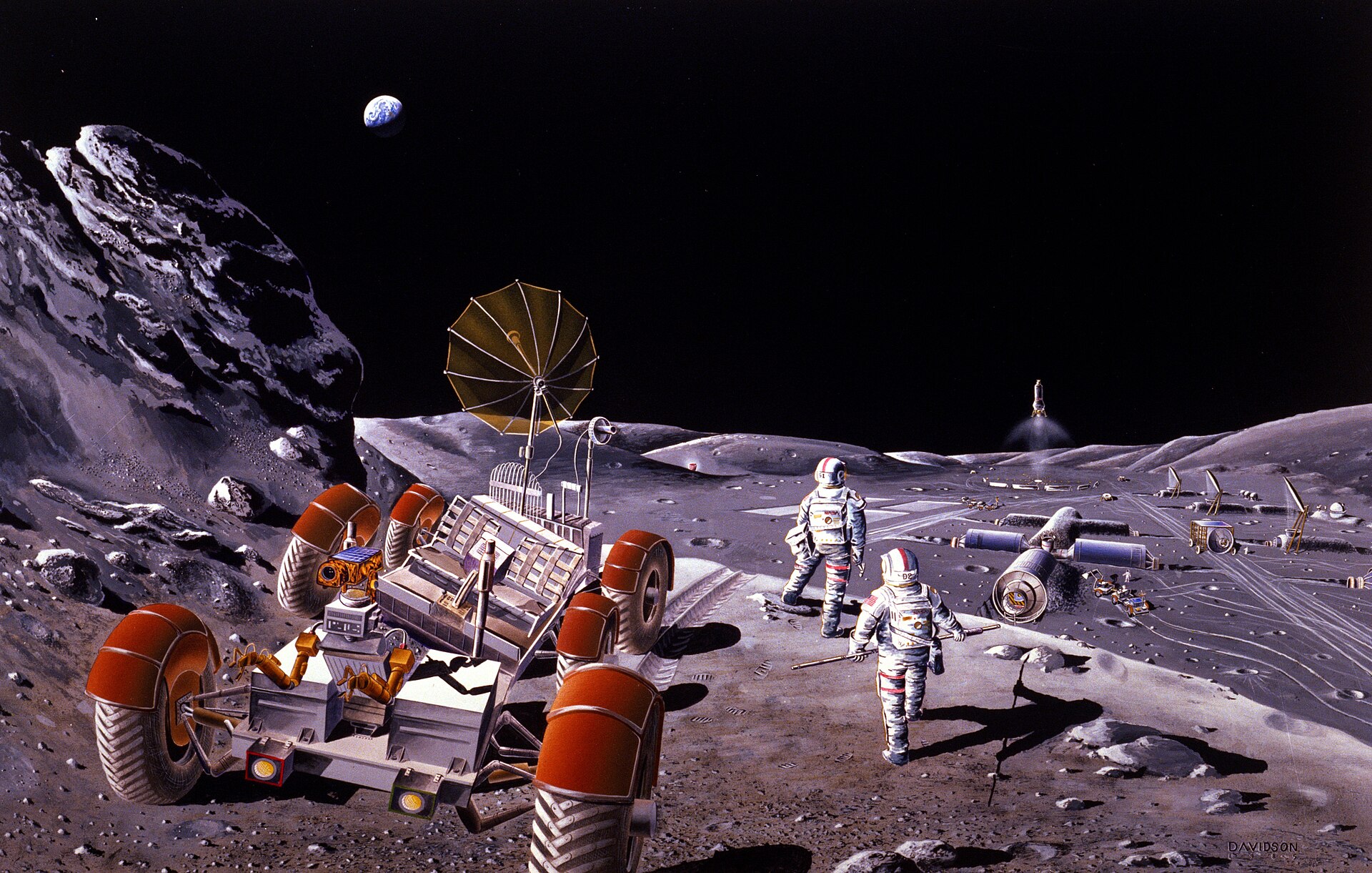
On March 24, 2026, local time, NASA’s new Administrator Jared Isaacman officially announced at the agency’s Washington headquarters that it would pause the development of the original Lunar Gateway orbital station program, instead redirecting core resources to the construction of a permanent lunar surface base. This new $20 billion initiative aims to build humanity’s first permanent extraterrestrial surface outpost within the next seven years, marking a major shift in the direction of NASA’s Artemis lunar landing program and reshaping the landscape of future deep space exploration amid an accelerating global lunar race.
Shelving the Nearly Completed Lunar Gateway for Lunar Surface Infrastructure
The most notable aspect of NASA’s strategic pivot is the overhaul of the Lunar Gateway project. Constructed by Northrop Grumman and Lockheed Martin Space Systems, this lunar orbital station is largely complete and was originally designed to serve as a research platform and transit hub in lunar orbit. Under the initial plan, astronauts would first reach the orbital station before transferring to lunar landers for surface missions. It was once a cornerstone of NASA’s Artemis program and a key vehicle for international lunar exploration cooperation.
Isaacman made it clear, however, that pausing the Lunar Gateway in its current form to focus on infrastructure for sustained lunar surface operations is no impulsive decision. For one, the Gateway’s specific orbit imposes significant performance constraints on commercial lunar landers, and repeated project delays have pushed its initial operational date to the 2030s. For another, NASA argues that building a direct lunar surface base is a more effective way to achieve the core goal of "long-term human lunar residency" than an orbital transit hub.
While repurposing already built or under-construction orbital station equipment for the lunar surface poses practical challenges such as hardware adaptation and technical adjustments, Isaacman stated that NASA will reorganize existing equipment resources and leverage commitments from international partners to ensure these investments continue to support lunar surface exploration and subsequent deep space missions. This shift has directly impacted billions of dollars in project contracts, with partner companies rushing to revise their plans to align with the accelerated project timeline.
A Three-Phase Plan for the Lunar Base: From Frequent Exploration to Long-Term Residency
To realize permanent human residency on the lunar surface, NASA has proposed a phased three-step construction plan that transforms the Moon from a low-frequency exploration target into a high-frequency operational site, integrating base construction closely with actual exploration missions.
The first phase is Verification and Accumulation. Centered on programs such as Commercial Lunar Payload Services, this phase will drastically increase the frequency of lunar exploration missions. Multiple uncrewed missions will validate key technologies including lunar surface cargo transportation, equipment deployment, and environmental adaptation, laying the groundwork for subsequent infrastructure construction.
The second phase focuses on Infrastructure Formation. Following the completion of early technical verification, NASA will build semi-habitable core facilities on the lunar surface capable of supporting regular astronaut residencies. It will also fully engage international cooperation, integrating global lunar exploration resources to make the base a new platform for international deep space exploration collaboration.
The third phase aims to Achieve Long-Term Residency. As heavy crewed lunar landing systems mature, large-scale living, research, and operational infrastructure will be transported to and assembled on the lunar surface, ultimately enabling sustained human presence on the Moon. This will turn the Moon into a true "outpost" for humanity to move beyond the Earth-Moon system and into deep space.
Notably, despite the strategic shift, NASA remains committed to the core Artemis goal: returning humans to the lunar surface by 2028. To ensure this target, NASA will adjust its flight plans, adding dedicated test missions before the final crewed lunar landing to help astronauts and ground teams gain more practical experience and enhance mission reliability.
A Pivot Amid the Lunar Race: The Moon as a "Stepping Stone" for Deep Space Exploration
NASA’s strategic shift is not an isolated decision but a move made against the backdrop of an accelerating global lunar race. Currently, China, Russia, and other nations are advancing their own lunar exploration programs, with China aiming to achieve crewed lunar landing by 2030. Competition and cooperation coexist among countries in areas such as lunar resource exploration and infrastructure construction. By abandoning the orbital station and focusing on a surface base, NASA hopes to consolidate U.S. leadership in deep space exploration in a more direct manner.
At the same time, this shift has fundamentally redefined the Moon’s role—from a mere exploration target to a "stepping stone" for humanity’s deep space endeavors. Isaacman explicitly stated that the lunar base is not an end in itself but a precursor to future Mars missions. NASA is simultaneously advancing the development of cutting-edge technologies such as nuclear propulsion systems, with plans to launch a nuclear-powered deep space vehicle by 2028. This technology will drastically improve the range and endurance of deep space missions, laying the foundation for future crewed Mars exploration.
This vision aligns with the layout of the commercial aerospace sector. SpaceX founder Elon Musk previously announced that the company would shift its R&D focus from Mars to the Moon, planning to build a "Lunar City" within the next decade. While this goal has sparked skepticism due to technical challenges, the alignment between commercial aerospace and NASA’s official plans has made the commercialization and scaling of lunar exploration an irreversible trend.
Reshaping International Cooperation: Deep Space Exploration Enters the Infrastructure Era
NASA’s suspension of the Lunar Gateway has also reshaped the landscape of international lunar exploration cooperation. Prior to this, partners such as the Canadian Space Agency (CSA) had invested heavily in the Lunar Gateway, with Canada developing the next-generation Canadarm3 robotic arm specifically for the orbital station. NASA now states that it will promote the "repurposing" of these international cooperation achievements to support the construction and operation of the lunar surface base, with Canada’s robotic arm technology to be applied to lunar surface tasks such as equipment maintenance and cargo handling.
This means future international lunar cooperation will shift from joint R&D of an orbital station to the co-construction and sharing of a lunar surface base, expanding collaboration from technical development to infrastructure operation, research data sharing, and resource development and utilization. NASA’s pivot also signals the official arrival of the "Infrastructure Era" for global deep space exploration—moving beyond the previous phase centered on exploration and sampling, future deep space efforts will prioritize infrastructure for long-term residency, giving humanity a genuine "foothold" beyond Earth.
From the Apollo program’s historic first lunar landing to today’s plans for a permanent lunar base, humanity’s exploration of the Moon is evolving from "brief visits" to "long-term residency". NASA’s strategic shift is not only an optimization of its own lunar program but also a reflection of the global trend in deep space exploration: as technological accumulation reaches a critical stage, building extraterrestrial infrastructure and achieving human interplanetary existence have become new goals.
The construction of a lunar base is destined not to be a solo endeavor by a single nation. Future deep space exploration will be both a technological competition and a win-win for cooperation. This planned lunar base will not only serve as a new starting point for humanity’s exploration of the universe but also a new stage to test global aerospace collaboration.