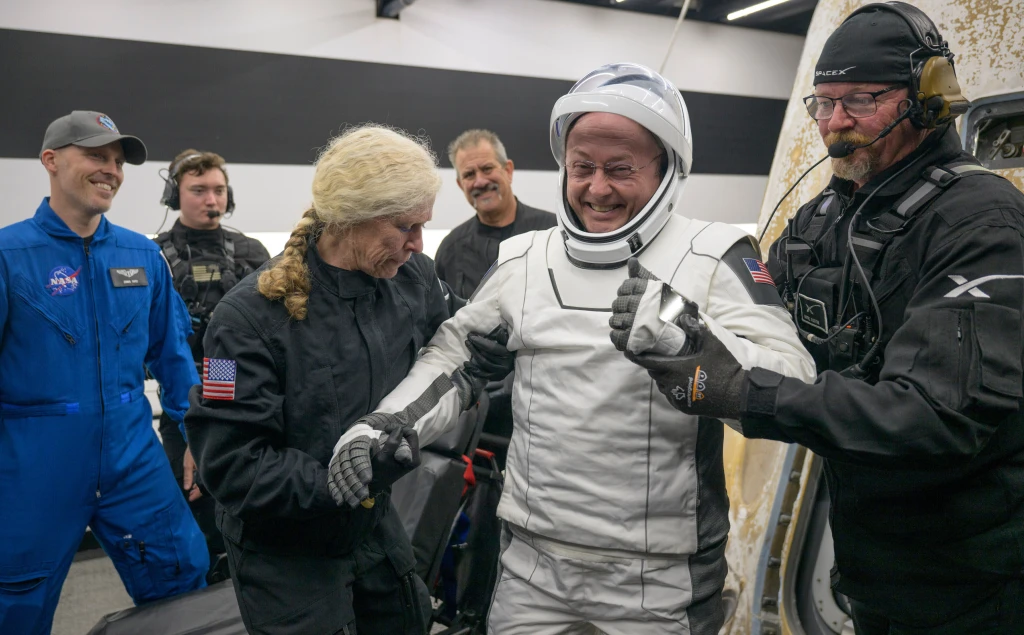
In January 2026, veteran NASA astronaut Mike Fincke suffered a sudden, unexplained episode of aphasia aboard the International Space Station — the first incident of its kind to trigger an emergency medical return from orbit. The event has forced a fundamental re‑evaluation of how NASA screens, monitors, and manages astronaut health, particularly as the agency prepares for long-duration deep‑space missions to the Moon and Mars. On March 28, 2026, the agency published updated plans to modernize its astronaut medical assessment system, building on revised OCHMO STD‑100.1A standards, with a sharper focus on neurological risk, long‑duration physiological stress, and autonomous medical capability in deep space.
A Wake-Up Call: On-Orbit Aphasia Exposes Gaps in Current Medical Capabilities
On January 7, 2026, Mike Fincke, 59, experienced a 20‑minute episode of aphasia during a routine meal on the ISS, with no preceding pain, shortness of breath, or other warning signs. Crewmembers activated on‑orbit medical protocols and performed ultrasound scans, while ground physicians ruled out acute cardiac events. Yet no clear cause was identified in orbit. Given the station’s limited diagnostic tools, NASA ordered Fincke’s early return — marking the first operational medical evacuation from the ISS in program history. He landed on January 15 and underwent comprehensive evaluation at the Johnson Space Center.
Fincke’s case underscored critical limitations in NASA’s existing medical framework. With 549 days in space across multiple missions, he represented one of the agency’s most experienced crew members, yet the system lacked robust, routine monitoring for subtle neurological changes linked to long‑term microgravity exposure. Traditional astronaut health protocols were designed primarily for low‑Earth orbit, relying on constant ground communication and rapid return capability. The Fincke incident revealed that these systems are insufficient for detecting or managing sudden, non‑typical neurological events — let alone for deep‑space missions where evacuation is impossible and communication delays stretch to minutes or hours.
Space conditions — microgravity, cosmic radiation, isolation, and circadian disruption — are known to degrade musculoskeletal, cardiovascular, and metabolic health. But the 2026 episode highlighted a long‑underemphasized risk: cumulative neurological effects that can manifest acutely and without warning. For NASA, this was not merely an operational anomaly, but a structural flaw in how it assesses long‑duration space health.
Revised Medical Standards: From LEO‑Centric to Deep‑Space‑Ready
NASA first updated its core medical policy in September 2024, releasing OCHMO STD‑100.1A: Medical Selection, Recertification, and Mission Evaluation — a sweeping revision that integrated commercial astronauts and suborbital researchers into a unified qualification system and formalized institutional medical risk assessment. Following Fincke’s on‑orbit incident, the March 2028 refresh advances this framework from a low‑Earth‑orbit safety model to one built for deep‑space resilience.
Expanded Eligibility and Standardization Across All Spaceflight Participants
The updated system ends the historical separation between NASA professional astronauts and commercial crew members. It formally defines commercial astronauts, includes suborbital researchers, and establishes tiered medical requirements aligned with mission profile: suborbital flight, LEO commercial station stays, and deep‑space expeditions. By unifying screening and recertification across sectors, NASA aims to build a broader, more diverse dataset of spaceflight health effects, improving risk modeling for future long‑duration missions.
Neurological Monitoring Moves to Center Stage
The most consequential shift is the institutionalization of neurocognitive monitoring. In direct response to the aphasia event, NASA will implement regular assessments of language function, executive cognition, and cerebral blood flow, supported by portable physiological monitoring tools. The agency has also begun a retrospective review of all active astronauts’ medical records to identify unreported neurological symptoms or trends.
The revised framework integrates mission variables directly into risk scoring: duration, orbital altitude, radiation exposure, distance from Earth, and medical evacuation latency. For Mars‑class missions — which may exceed 1,000 days with 870–1200 mSv of radiation — the system enables structured risk‑benefit analysis rather than one‑size‑fits‑all clearance.
Full Lifecycle Medical Management
The new model replaces pre‑flight “pass/fail” screening with continuous, longitudinal health management spanning pre‑mission, in‑mission, and post‑mission phases. It ties directly into NASA’s Longitudinal Health Study (LHS), emphasizing proactive risk reduction, real‑time in‑flight monitoring, standardized response protocols for ambiguous symptoms, and long‑term post‑flight tracking. This shift reflects a recognition that space health is not a pre‑launch qualification, but an ongoing operational challenge.
Technological and Scientific Upgrades to Support the New Framework
Medical policy alone cannot close the gaps exposed by Fincke’s incident. NASA is pairing regulatory reform with targeted investments in on‑orbit diagnostics, monitoring technology, and basic space physiology research.
Improved On-Orbit Diagnostic Capacity
The ISS’s reliance on ultrasound as its primary imaging tool revealed a critical capability gap. NASA is upgrading in‑space medical hardware to support more robust evaluation of neurological and cardiovascular events, alongside improved data links for rapid ground interpretation. The agency is also revising in‑flight medical protocols to include clearer pathways for assessing aphasia, cognitive changes, and other non‑specific symptoms, reducing dependence on real‑time ground direction.
Next-Generation Monitoring Tools
To enable early anomaly detection, NASA is accelerating development of non‑invasive monitoring systems, including portable EEG and brain‑monitoring interfaces that can track cerebral function continuously without disrupting crew operations. These tools are intended to flag subtle changes before they become acute events — essential for missions where crew members cannot quickly return to Earth.
Targeted Research Into Microgravity and Neural Health
Fincke’s episode has elevated microgravity’s neurological effects to a top research priority. NASA is expanding studies into cerebral blood flow, brain structural changes, and cognitive performance under long‑duration exposure, building on prior collaborative work with JAXA on gravity thresholds and musculoskeletal decline. Parallel research continues into high‑linear energy transfer (LET) radiation risks, which are far more severe in deep space than in low Earth orbit.
The Bigger Picture: Space Medicine Must Evolve for Deep Space
From Apollo to the ISS, human spaceflight has operated under a medical model built around short missions and rapid ground support. As NASA shifts to Artemis and Mars, that model is no longer viable. Deep‑space missions will involve months of one‑way communication delay, no abort options, and extremely limited medical infrastructure.
The 2026 overhaul of NASA’s astronaut medical evaluation system is more than a procedural update: it is a foundational adaptation to a future where humans live and work far from Earth. By embedding neurological monitoring, standardizing care across commercial and government crew, and tying medical policy to real mission risk, the agency is building the health architecture necessary for sustainable deep‑space exploration.
In the end, space medicine is not just about keeping astronauts healthy in space — it is about understanding how humans survive beyond Earth. The changes underway at NASA represent one of the most consequential steps yet in that endeavor.