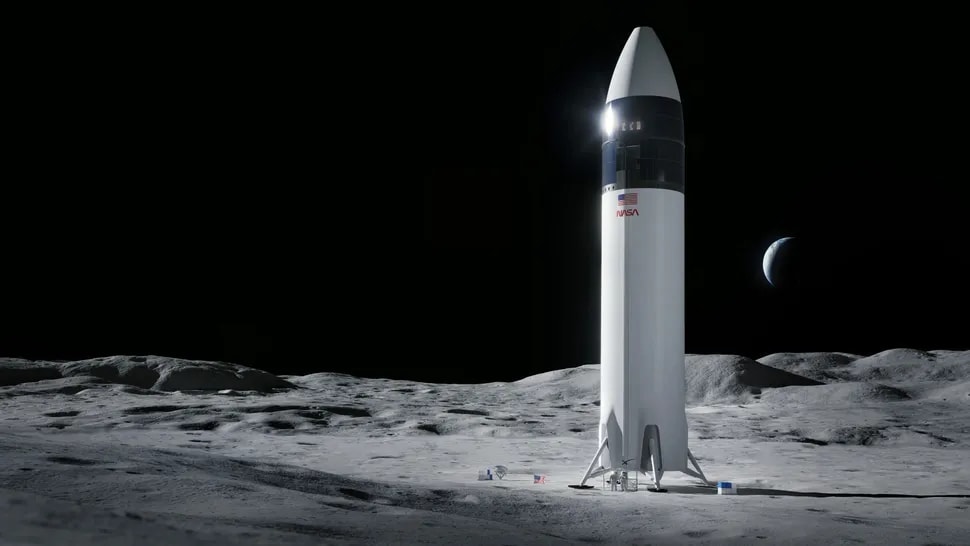
On February 27, 2026, NASA announced a major structural course correction to the Artemis Program, reshaping its core mission sequence and objectives. Artemis III—once targeted for a Q4 2028 lunar landing—has been moved up to mid-2027 but stripped of its moon-landing goal, redefined as a near-Earth orbit (LEO) systems-integration test. Humanity’s first crewed lunar landing since Apollo 17 will now be carried by Artemis IV, scheduled for early 2028, targeting the lunar south pole. This pivot shifts the program from a schedule-driven rush to a risk-mitigated, stepwise validation approach.
Artemis III (2027): Demoted from Lunar Landing to Earth-Orbit Dress Rehearsal
Originally planned as the historic return of humans to the lunar surface, Artemis III’s mission has been completely redefined:
Launch: Mid-2027 (earlier than the previous 2028 target)
Destination: Low Earth Orbit only — no transit to the Moon
Core Objectives:
Manned rendezvous and docking between Orion and commercial Human Landing Systems (SpaceX Starship HLS or Blue Origin Blue Moon)
In-orbit validation of the next-generation AxEMU lunar spacesuit — life support, communications, and EVA operations
Demonstrate multi-vehicle coordination, propellant management, and long-duration on-orbit readiness
Analog: A modern equivalent of Apollo 9 — which tested the Lunar Module and Command/Service Module entirely in Earth orbit, without lunar transit
Artemis IV (2028): The Real Return to the Lunar Surface
The first crewed moon landing is now officially assigned to Artemis IV:
Launch: Early 2028NASA
Mission: Two astronauts land on the lunar south pole to conduct geological surveys, resource prospecting, and surface operationsNASA
Architecture:
Launched on SLS Block 1 with the Orion spacecraft
Crew transfers to a commercial HLS lander for descent to the surface
~1 week of surface operations before ascent to lunar orbit, rendezvous with Orion, and return to EarthNASA
Why the Overhaul? Safety, Schedule, and Technical Reality
NASA’s reversal reflects hard constraints:
HLS Development Delays
SpaceX’s Starship HLS remains in ground testing and prototype iteration. Critical technologies—thermal protection, propulsion, precision landing, and ascent—are not yet human-rated for a 2027 lunar mission.
Safety Warnings
NASA’s independent Aerospace Safety Advisory Panel warned that stacking three “firsts” — first Orion-HLS docking, first deep-space crewed flight, and first lunar landing — into one mission presented unacceptable risk.
Return to Proven Stepwise Validation
The plan now mirrors Apollo’s successful cadence: Earth-orbit shakedown (Artemis III) → crewed lunar flyby (Artemis II, 2026) → crewed lunar landing (Artemis IV, 2028). This sequence drastically reduces mission-level failure risk.
Apollo vs. Artemis: A Generational Paradigm Shift
Despite timeline shifts, Artemis remains fundamentally different from Apollo:
Apollo: Politically driven, one-off demonstration, short-term science, no sustained development
Artemis: Sustainable presence, resource utilization (ISRU), international cooperation, commercial integration — focused on the lunar south pole’s water ice as a cornerstone for long-term bases and cislunar infrastructureNASA.
Global Impact and Future Cadence
International Partners: ESA, CSA, JAXA, and others are adjusting their contributions to match the new sequenceNASA
Commercial Space: SpaceX and Blue Origin gain critical extra time for HLS development and testing
Future Missions: Artemis V (late 2028) will conduct a second crewed landing; NASA aims for 1–2 lunar landings per year long-term
Closing
The “downgrade” of Artemis III is not a retreat but a more rational, safer, and sustainable reset. The 2027 Earth-orbit test will de-risk the systems that must perform flawlessly for lunar operations. While humanity’s return to the Moon is slightly delayed, the path is now far more solid: the lunar south pole will welcome its first human visitors in over half a century — in early 2028, aboard Artemis IV.