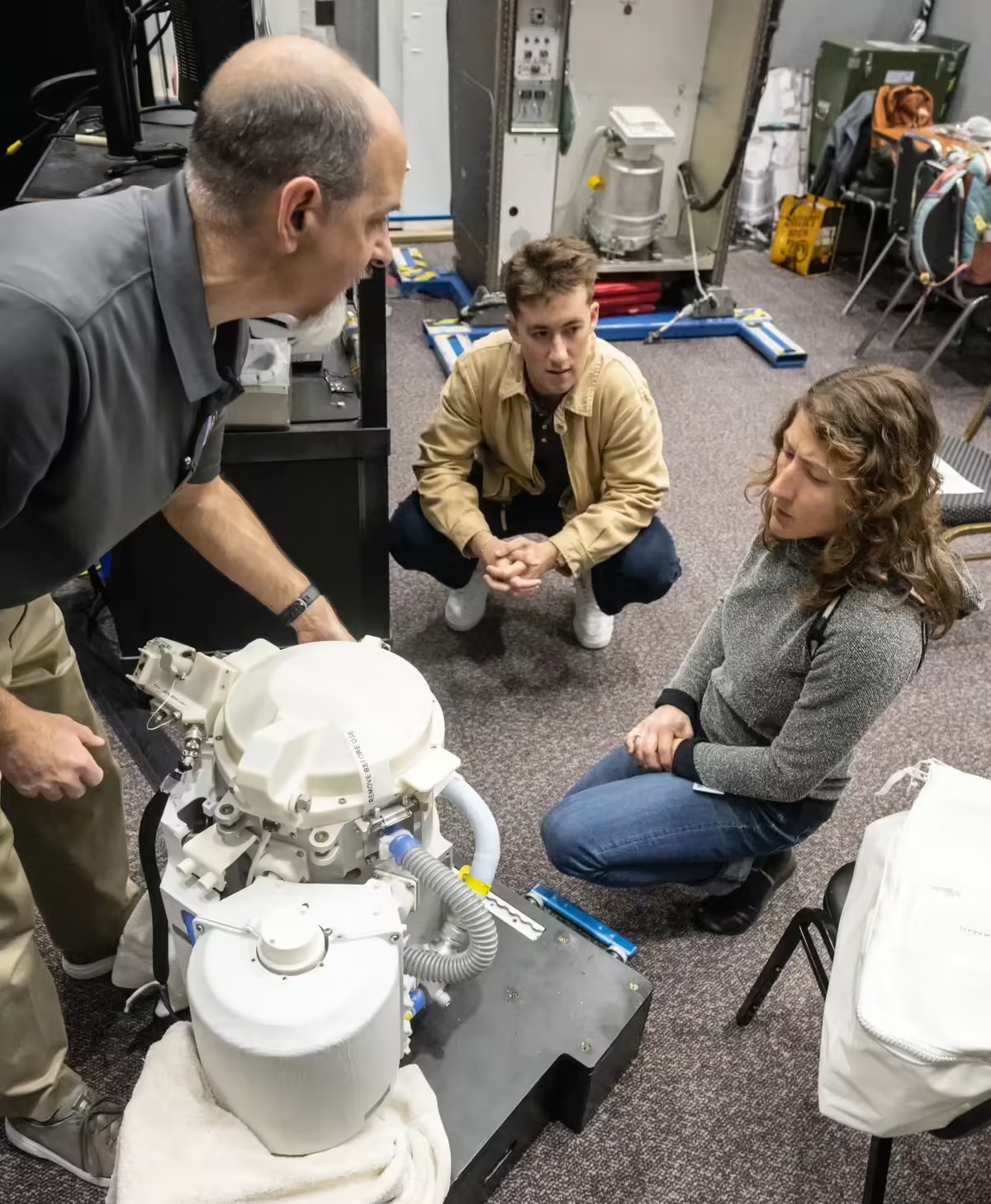
On April 2, 2026, during NASA’s Artemis II crewed lunar flyby mission, a malfunction occurred in the Universal Waste Management System aboard the Orion spacecraft, with the core issue centering on a stuck fan in the urine collection module. In response to the sudden failure, the ground control team and astronauts acted quickly, activating a backup plan to ensure basic needs were met and completing system repairs within hours, safeguarding the smooth progress of the 10-day crewed lunar mission. While the malfunction had no substantial impact, it served as a practical test of the Orion spacecraft’s life support system’s emergency capabilities and brought the "detail challenge" of space toilets back into public view.
Malfunction Occurs Hours After Launch, Urine Collection Temporarily Disrupted
On April 1 (local time), Artemis II lifted off smoothly from NASA’s Kennedy Space Center. However, hours after launch, as the astronaut crew activated the life support system, Mission Specialist Christina Koch was the first to detect an anomaly in the toilet system: the fan responsible for urine collection failed to start properly and became stuck, temporarily disabling the urine collection function.
NASA spokesperson Gary Jordan confirmed the malfunction during the mission livestream, clarifying that the root cause was a fault in the toilet system’s controller, not mechanical damage to the fan itself—a determination that laid the groundwork for a rapid repair. Notably, the malfunction only affected the urine collection module; the solid waste collection function remained operational, ensuring the astronauts’ basic toileting needs were not fully disrupted. To address the emergency, NASA quickly activated a backup plan, guiding the astronauts to use collapsible contingency urine containers (CCUs)—a legacy emergency device dating back to the Apollo program that played a critical backup role in ensuring the astronauts’ normal physiological needs.
During the malfunction response, Christina Koch reported to Mission Control that one of the CCUs was full. The ground team immediately issued instructions, guiding the astronauts to jettison the waste into space at an appropriate time. The entire operation was conducted smoothly, with no impact on the operation of other spacecraft systems.
Efficient Ground-Crew Coordination Enables Rapid System Restoration
Upon receiving the malfunction report, the flight control team at Houston’s Mission Control Center quickly collaborated with engineers from Lockheed Martin to develop a phased repair plan. Detailed operational instructions were transmitted to Christina Koch via radio, with ground engineers providing real-time remote guidance throughout the system inspection and repair process.
Following the ground team’s precise guidance, Christina Koch sequentially cleaned the stuck fan area, reset the controller parameters, and conducted a comprehensive integrity check of the system. When she reported to the ground, "Houston, integrity check is normal," it marked the initial success of the repair operation. Shortly after, Amy Dill, Capsule Communicator (CapCom) at Mission Control, sent confirmation to the spacecraft: "Happy to report the toilet is operational. It’s recommended to let the system reach operating speed before use and keep it running for a moment after use." The astronaut crew responded with "cheers all around," officially announcing the complete resolution of the urine collection system malfunction and the full restoration of system functionality, eliminating the need for the backup CCUs.
From the detection of the malfunction to its resolution, the entire process took only a few hours—demonstrating NASA’s mature on-orbit emergency response system and the astronauts’ solid operational capabilities, while accumulating practical experience for handling sudden failures in future deep-space missions.
Orion’s Space Toilet: A Generational Leap in Compact, Functional Design
The Universal Waste Management System that malfunctioned is a next-generation space toilet developed exclusively by Lockheed Martin for the Orion spacecraft. It is also NASA’s first dedicated toileting system designed for crewed lunar missions since the Apollo program, representing a comprehensive upgrade in compactness, user-friendliness, and functionality compared to its predecessors.
While the Orion spacecraft’s internal volume—roughly equivalent to two SUVs—is significantly larger than the Apollo command module, it remains a compact layout. As a result, the space toilet features an integrated design, built directly into the spacecraft’s floor, with a size comparable to a commercial airliner’s restroom. To adapt to the microgravity environment, the system is equipped with foot restraints to prevent astronauts from floating during use. It also uses airflow suction technology: solid waste is drawn into a dedicated collection device via airflow, while urine is pulled into a storage tank through a personalized funnel using negative pressure generated by the fan—fundamentally solving the challenge of waste collection in microgravity.
The system was also optimized with a specialized urine collection funnel for female astronauts, separating the urine and solid waste collection functions. The fact that only the urine collection module was affected by the malfunction is a direct reflection of this design advantage. Jeremy Hansen, astronaut from the Canadian Space Agency (CSA), noted in a pre-mission preview that this small hygiene compartment is a rare private space aboard the cramped spacecraft and a key configuration for enhancing astronaut comfort during long-duration flights.
Compared to the crude methods of the Apollo era—where astronauts used plastic collection bags for waste and jettisoned urine directly into space—Orion’s Universal Waste Management System is undoubtedly a generational leap. Blaine Brown, Director of Mechanical Systems for Lockheed Martin’s Orion spacecraft, emphasized that while the system may seem like a "comfort feature," it is actually a critical component for deep-space flight, with its stability directly impacting astronauts’ physical and mental state and mission efficiency.
The Significance of a "Small" Malfunction: Practical Validation of Deep-Space Life Support
While the urine collection system malfunction had no substantial impact on the Artemis II mission, it served as a valuable on-orbit practical test for NASA’s Artemis Program. As Orion’s first crewed flight, a core objective of Artemis II is to validate the reliability and emergency response capabilities of various subsystems—including the life support system—in the deep-space environment. Such "detail malfunctions" are precisely the most common and critical issues in deep-space missions.
Unlike the International Space Station, which has a complex and redundant waste recycling system, Orion’s waste management system is lightweight and simplified to adapt to deep-space flight: urine is temporarily stored before being jettisoned into space, while solid waste is retained until the end of the mission and returned to Earth. While this design meets the needs of short-duration deep-space missions, it places higher demands on system stability. The rapid resolution of the controller malfunction not only validated the system’s redundancy but also tested the efficiency of ground-crew emergency coordination, accumulating valuable experience for future longer-duration lunar stays and Mars exploration missions.
As NASA’s pioneering mission to return to the Moon, Artemis II carries the core mission of validating the next generation of crewed deep-space flight systems. From the performance of the SLS rocket to Orion’s navigation and communication, and the detailed operation of the life support system, every test and validation is laying the groundwork for the Artemis IV crewed lunar landing in 2028 and the establishment of a permanent lunar base in 2032. The minor incident with the space toilet also reminds us that every step of humanity’s journey into deep space requires not only breakthroughs in core equipment technology but also rigorous attention to every "small detail" of life support.
Currently, the four astronauts aboard Artemis II have resumed normal mission operations, and the spacecraft is proceeding to lunar orbit as planned. This close-call malfunction response not only demonstrated NASA’s mature aerospace engineering capabilities but also highlighted that progress in deep-space exploration stems not only from major technological breakthroughs but also from rigorous control over every "small matter."