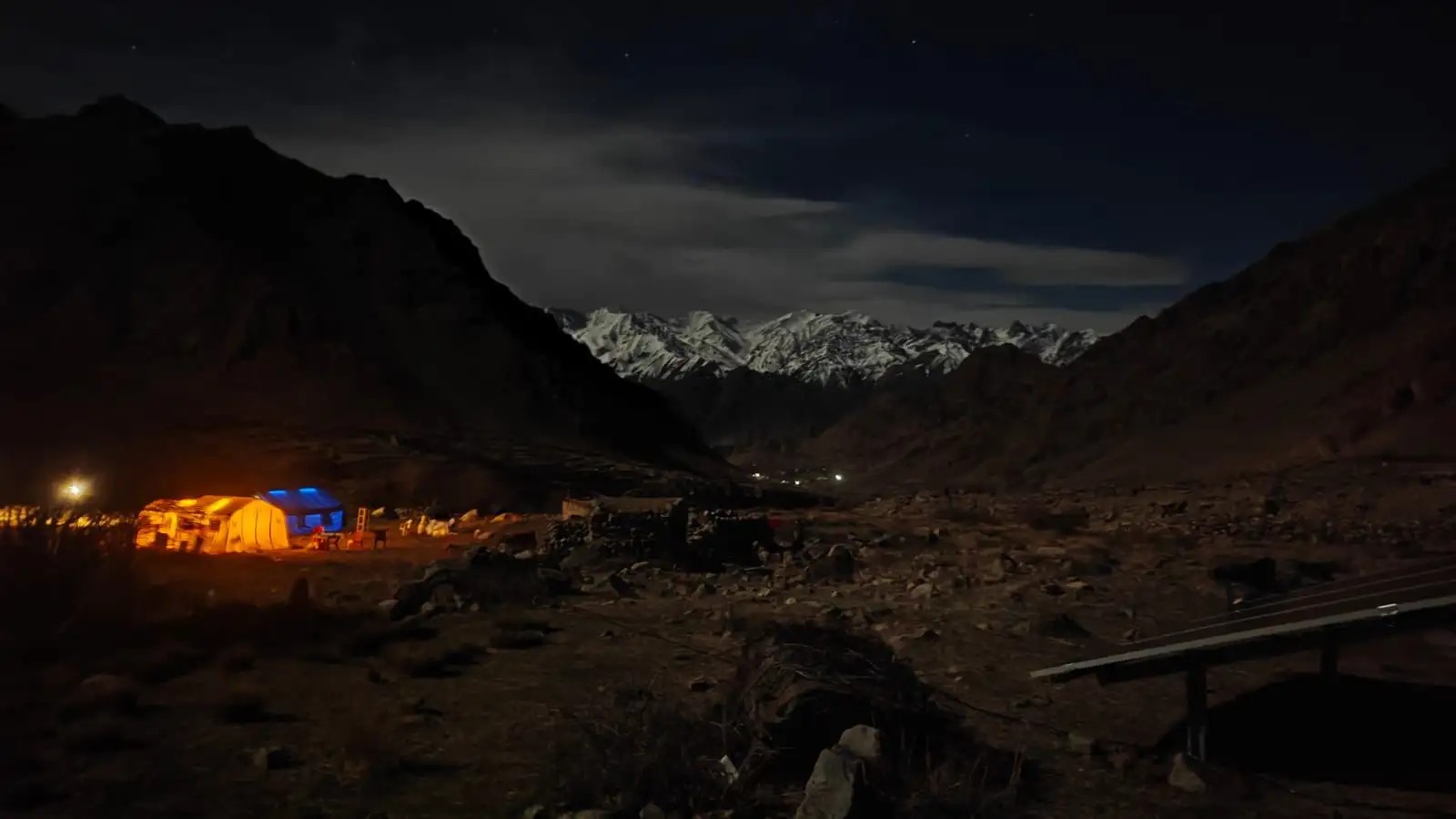
On 2 April 2026, the Indian Space Research Organisation (ISRO) officially launched the MITRA mission (Mapping of Interoperable Traits and Response Assessment) in Leh, Ladakh. This 8‑day high‑altitude simulation trial is being conducted at an elevation of approximately 3,500 metres, focusing on physiological, psychological, and collaborative performance testing of astronaut candidates and ground control teams under extreme environmental conditions. As ISRO’s first dedicated team behavioral study for the Gaganyaan human spaceflight program, MITRA formally places human factors research on par with spacecraft engineering development, representing another global example of using Earth’s extreme environments for human spaceflight analog testing.
Led by ISRO, the mission is designed in partnership with the Institute of Aerospace Medicine of the Indian Air Force. Protoplanet, a startup based in Bengaluru, supports facility management and compliance processes. Four Gaganyaan astronaut candidates (Gaganya Tris) are participating full‑time. From 2 to 9 April, the research team will collect multi‑modal data under hypobaric hypoxia, low temperatures, and geographic isolation — key stressors analogous to spaceflight — to provide scientific input for astronaut training, mission planning, and emergency response frameworks for Gaganyaan.
Ladakh as a Natural Space Analog
ISRO’s selection of Leh is based on environmental fidelity and operational practicality. At 3,500 m, oxygen availability is roughly 60 % of sea level, creating a natural hypoxic environment that simulates potential cabin atmosphere anomalies. Large diurnal temperature variations (exceeding 20 °C) induce physiological stress comparable to extreme thermal conditions in space. Remote geographic isolation also mimics the psychological seclusion of long‑duration space missions.
This combination of stressors elicits realistic physiological and psychological responses without the cost and risk of orbital flight. Analogous high‑altitude and polar testing is standard practice internationally: NASA conducts Mars simulations in Antarctica’s Dry Valleys, ESA trains astronauts in the Alps, and China has performed aerospace medical tests on the Qinghai‑Tibet Plateau. ISRO’s use of Ladakh follows this established approach, adapted to India’s geography.
Team Performance as a Core Focus
Unlike single‑subject physiological tests, MITRA emphasizes team interoperability — a critical factor in mission success, especially during emergencies. The trial includes simulated communication delays and off‑nominal scenarios to evaluate decision‑making, communication efficiency, and problem‑solving under stress for both in‑situ candidates and remote ground teams. This shift from individual assessment to team dynamics reflects a mature understanding of human spaceflight complexity.
Addressing a Key Gap: Human Factors for Gaganyaan
MITRA addresses a critical gap in ISRO’s human spaceflight preparedness. Gaganyaan, India’s first crewed mission, aims to launch three astronauts to low Earth orbit and return them safely in 2027. Success depends not only on launch vehicles, spacecraft, and life support systems but also on robust selection, training, and operational support systems — all grounded in human factors research.
India’s space program has historically focused on uncrewed missions such as satellites, lunar, and Mars exploration, with relatively limited heritage in aerospace medicine, human performance, and extreme environment psychology. Human variability and behavioral uncertainty cannot be fully engineered around; they require systematic study. MITRA represents ISRO’s first structured effort in this domain, with continuous monitoring of cardiopulmonary function, SpO₂, cognitive response, and quantitative assessment of anxiety, cohesion, and team performance. The data will support India’s first indigenous human factors database for human spaceflight.
Outputs will directly inform:
Astronaut selection criteria tailored to Indian physiological profiles
Targeted training in high‑altitude adaptation, stress resilience, and team coordination
Mission procedures and emergency protocols optimized for human performance under stress
Including ground control teams in the study ensures a crew–ground integrated perspective, aligning research with real mission operations.
Multi‑Stakeholder Collaboration
MITRA also serves as an interagency and industry integration exercise: ISRO leads, the Indian Air Force provides aerospace medicine expertise, and Protoplanet manages on‑site operations. This model — space agency + military medical institute + private tech firm — leverages specialized capabilities while encouraging private‑sector participation in India’s human spaceflight ecosystem. Engagement of a startup in mission operations marks an early step toward commercial involvement in Gaganyaan support services.
From Technological Development to Systemic Capability
MITRA signals India’s transition from component‑level technological advancement to systemic human spaceflight capability. While ISRO has achieved milestones in uncrewed exploration, human spaceflight demands an end‑to‑end system including engineering, medical support, training, and operations. MITRA strengthens the human dimension of this system.
Although India still faces challenges in crewed mission experience and technology maturity, MITRA represents a methodical, evidence‑based step toward reliable human spaceflight. Data collected during the ongoing trial will support not only Gaganyaan but also future long‑duration and deep‑space crew missions.
As MITRA progresses and Gaganyaan moves toward implementation, India continues to build toward its goal of independent human spaceflight capability.