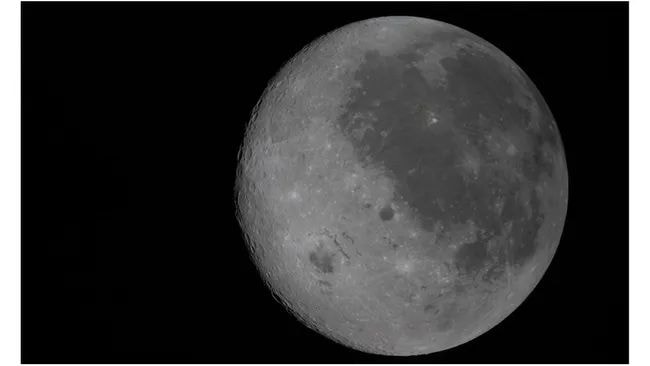
At 19:02 EDT on April 6 (07:02 CST April 7), NASA’s Artemis II mission set a new record for the farthest distance from Earth ever achieved by a crewed spacecraft, reaching 406,771 kilometers and surpassing the mark set by Apollo 13 in 1970 — a record that stood for 56 years. The Orion spacecraft performed a precise lunar flyby at an altitude of approximately 6,545 kilometers, then continued to its apogee before beginning its journey home using lunar gravity assist. This achievement is far more than a numerical milestone: it marks the return of humans to deep lunar space and validates the systems that will carry astronauts back to the lunar surface and onward to Mars.
From Emergency Survival to Precision Deep-Space Flight
Apollo 13’s historic distance was a product of crisis: an oxygen tank explosion forced an abort of the lunar landing, and the crew used the lunar module as a lifeboat to escape along a free-return trajectory, peaking at roughly 400,171 kilometers.
Artemis II’s record, by contrast, is the result of deliberate engineering and orbital design. The mission employed an optimized free-return profile, with a controlled lunar gravity assist that required no major midcourse corrections. The 6,600-kilometer increase over Apollo 13 is not accidental — it reflects a generational leap in navigation, propulsion, and mission planning.
Where Apollo had limited windows for visual observation, Orion features large panoramic windows and high-resolution imaging systems, allowing the crew to conduct systematic observations of the lunar far side and polar regions.
Lunar Far Side and a 53-Minute Celestial Eclipse
The seven hours around closest approach represented the mission’s most scientifically and operationally intense phase.
Flying over the lunar far side, the crew experienced a 40-minute communications blackout — a critical test of autonomous operations. They became the first humans to visually inspect the far-side polar regions at close range, documenting terrain, craters, and lighting conditions that directly support future landing site selection and water-ice prospecting.
As Orion passed into lunar shadow, the crew witnessed a 53-minute total solar eclipse — an event impossible to observe from Earth’s surface. This unique vantage point allowed direct observations of the solar corona, solar wind, and coronal mass ejections, providing data that complements satellite and ground-based instruments.
Throughout the flyby, Orion’s life support, thermal control, navigation, and communications systems performed as designed, validating key technologies for long-duration deep-space missions.
A New Era of Diversity and International Collaboration
The Artemis II crew — Commander Reid Wiseman, Pilot Victor Glover, Mission Specialists Christina Koch and Jeremy Hansen — embodies a fundamental shift from Apollo’s homogeneous, U.S.-only model. Glover is the first Black astronaut to reach lunar distance; Koch is the first woman; Hansen is the first non-U.S. astronaut to reach lunar vicinity.
This reflects the Artemis Accords framework, with 38 nations participating in a shared lunar exploration architecture. Europe provided the Orion service module, Canada the robotic arm technology, and Japan contributed scientific payloads. Commercial industry — Lockheed Martin, Boeing, and SpaceX — now forms an integral part of deep-space exploration, moving beyond subcontractor to core partner.
Beyond the Record: Strategic and Industrial Implications
Artemis II is the critical shakedown for the entire Artemis Program. Success clears the way for Artemis III — now targeted for 2028 — which will land the first astronauts on the lunar south pole. The lunar Gateway, reusable landers, and in-situ resource utilization (ISRU) will follow, establishing a sustainable presence rather than brief sorties.
Industrially, the mission accelerates trends reshaping global spaceflight:
Heavy-lift and deep-space crew systems mature for operational use
Reusable architectures reduce long-term costs
Lunar resource governance and safety zones establish new norms for space law
The record set by Artemis II is not meant to last. As Jeremy Hansen noted, breaking a 56-year mark is intended to inspire the next wave of missions to push even farther.
Conclusion
406,771 kilometers is more than a distance — it is a bridge between Apollo’s past and Artemis’s future. With Orion now heading home, humanity has reaffirmed its ability to operate safely beyond low Earth orbit. The era of sustainable lunar exploration has begun, and this record will be remembered as the moment the next chapter of human deep-space exploration officially opened.