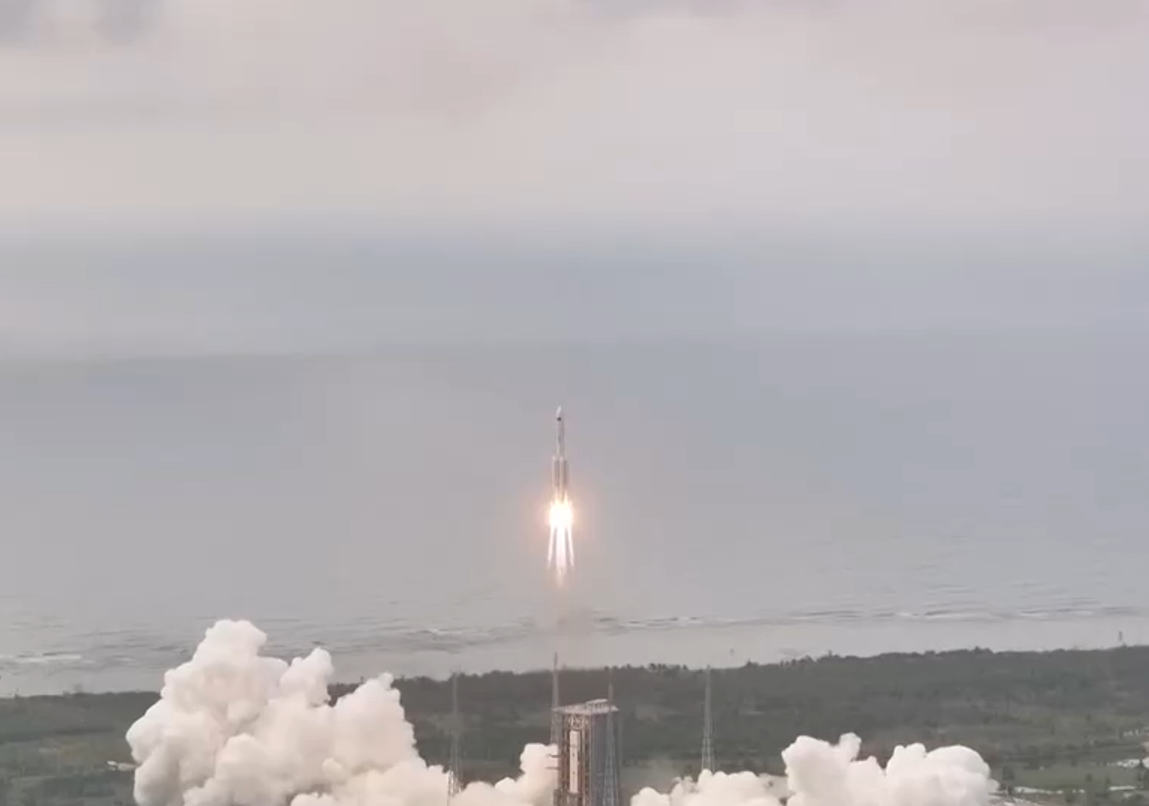
At 8:14 AM on May 11, 2026, the Long March 7 Y11 rocket lifted off from the Wenchang Space Launch Site, carrying the Tianzhou-10 cargo spacecraft. Approximately 10 minutes later, the spacecraft separated from the rocket and entered its predetermined orbit, successfully deploying its solar arrays.
With this, the primary launch phase of the Tianzhou-10 mission is officially complete.
For those following China’s space program, these launches have become increasingly routine. However, as the "chief logistics officer" for the Tiangong Space Station, every Tianzhou mission carries specific technical and operational significance that warrants a closer look.
1. What’s in the Cargo?
As a dedicated freighter, Tianzhou-10’s core mission is resupply. While the manifest is tailored to the specific needs of the crew currently on board, the payload generally falls into three categories:
Crew Supplies: This includes food, drinking water, clothing, and occasionally "surprise packages" for traditional holidays.
Propellant: Much like a car needs refueling, the space station requires regular propellant deliveries to maintain its orbital altitude and adjust its orientation.
Scientific Payloads: The space station is, at its heart, a national laboratory. Each mission delivers new experimental racks and hardware to support long-term research in microgravity.
2. Why the Long March 7?
The mission was once again powered by the Long March 7. Often referred to as the "cargo spacecraft specialist," this rocket was chosen for several practical reasons:
Environmentally Friendly: It utilizes liquid oxygen and kerosene engines. Unlike older rockets that used highly toxic propellants, the exhaust consists primarily of water and carbon dioxide, making it significantly cleaner.
Payload Matching: With a Low Earth Orbit (LEO) capacity of around 14 tons, the Long March 7 is perfectly sized for the Tianzhou series. It offers the most efficient ratio of power to payload for this specific task.
Launch Cadence: As the Chinese Space Station moves into permanent operation, maintaining a steady launch rhythm (one or two flights a year) requires a mature, reliable, and mass-produced launch vehicle like the Long March 7.
3. The Geographic Advantage of Wenchang
Tianzhou missions are almost exclusively launched from Wenchang, Hainan. This choice is driven by two main factors:
Low Latitude: Being closer to the equator allows the rocket to take better advantage of the Earth’s rotational speed. This saves fuel, which can then be converted into extra payload capacity.
Logistics: The Long March 7 has a large diameter that makes transport by rail difficult due to tunnel constraints. Launching from a coastal site like Wenchang allows the rocket components to be shipped via sea, which is far more flexible.
Final Thoughts
The successful entry of Tianzhou-10 into orbit marks the start of another routine resupply cycle for the Tiangong Space Station.
While space missions often seem far removed from daily life, they are a clear indicator of a nation’s engineering maturity. The ability to manage orbital logistics with the precision and regularity of a terrestrial courier service shows that China’s space program has moved well beyond the experimental phase and into a period of stable, long-term operation.
The next critical step will be the automated docking with the space station complex. We will continue to monitor the mission's progress.
Reference: Xinhua News, May 11, 2026, “Tianzhou-10 Cargo Spacecraft Launch a Complete Success”