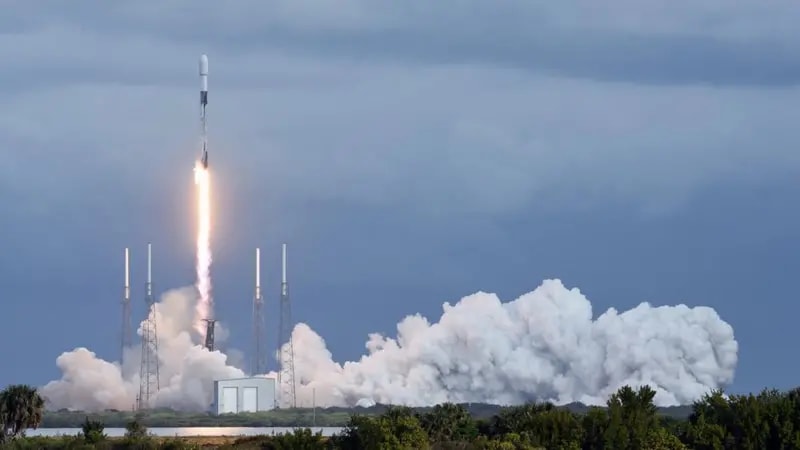
Elon Musk Wants a Million AI Satellites in Orbit:
SpaceX Plan for Space-Based Data Centers SpaceX CEO Elon Musk has revealed more details about the company plan to build data centers in space ahead of its highly anticipated IPO. His vision involves deploying millions of AI satellites in low-Earth orbit to create orbital computing infrastructure, bypassing the power and cooling bottlenecks that constrain terrestrial data centers. The disclosure came alongside news that SpaceX will list on the NASDAQ on June 12, 2026 -- an event expected to make Musk the world first trillionaire.
The xAI Merger In February 2026, SpaceX formally acquired Musk artificial intelligence company xAI, valuing the combined entity at $1.25 trillion.
In a memo posted to SpaceX website, Musk argued that current AI advances depend on large terrestrial data centers requiring immense amounts of power and cooling. Global electricity demand for AI, he wrote, cannot be met with ground-based solutions alone, even in the near term, without imposing hardship on communities and the environment. xAI own data center in Memphis, Tennessee, has faced criticism for its impact on nearby neighborhoods.
The Case for Space Musk contends that space offers conditions terrestrial facilities cannot match:
uninterrupted solar power, the natural cold of vacuum for cooling, and deployment flexibility unconstrained by ground-based power grids. Achieving this requires a constant stream of satellites launched into orbit. Under Federal Communications Commission rules, low-Earth orbit satellites must be de-orbited within five years, ensuring SpaceX would have a continuous cycle of launch demand and revenue.
Connection to Starlink SpaceX currently generates up to 80% of its revenue from launching its own Starlink satellites.
The space-based data center program would expand satellite deployment far beyond Starlink current scale. Starlink already serves over 10.3 million subscribers across 164 countries, with approximately 9,600 satellites in orbit. The data center satellites would operate in tandem with the Starlink constellation: one providing computing power, the other providing the communications backbone.
Skepticism and Challenges The concept of space-based data centers is not without controversy.
The cost of lifting computing hardware into orbit remains high, satellites have short maintenance and replacement cycles, and the long-term effects of the radiation environment on electronics need to be addressed. Additionally, xAI is currently burning approximately $1 billion per month, and the financial pressure on the merged company is significant. Morningstar has valued SpaceX at $780 billion, about 48% below the IPO price, reflecting skepticism from some investors about these ambitious plans.
Further Reading -
TechCrunch: SpaceX officially acquires xAI, with plan to build data centers in space - Space.com: Elon Musk wants to put 1 million AI satellites in space - SpaceX S-1 Prospectus (SEC)