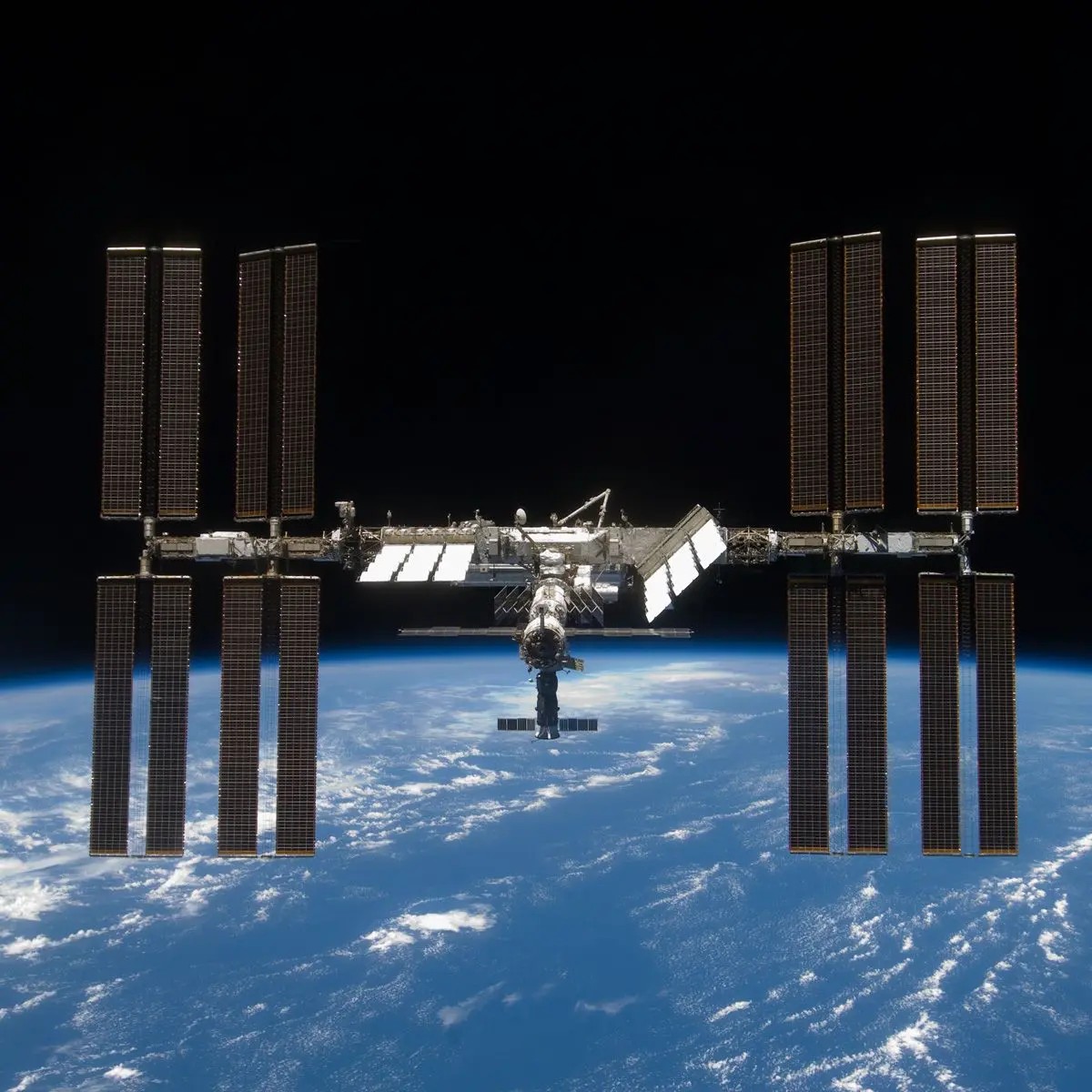
Russia is Sending a "Space Package" to the ISS! Progress MS-33 Spacecraft Starts Launch Preparation
Now the global space community is busy advancing various deep space exploration missions, while Russian space industry is steadily doing its own job and continuing to escort the International Space Station (ISS). On March 3rd, Russia's state space corporation (Roscosmos) announced that the service module of Launch Pad 31 at the Baikonur Cosmodrome has been repaired, and preparations for the launch of the Progress MS-33 cargo spacecraft have officially begun, laying the foundation for the launch mission on March 22nd. This is also the most concerned event in the Russian space community recently.
For friends who like space, you must have heard of the "Progress" cargo spacecraft. In the history of human spaceflight, it is a veteran player with a long service life and high reliability. Its story dates back to 1978 — that year, the Soviet Union successfully launched the world's first cargo spacecraft "Progress 1", and since then, space supply has become a regular practice. The current Progress MS series is an upgraded version of this classic model, which not only inherits the technical foundation of Soviet and Russian spaceflight, but also has made many improvements. Unlike the recoverable American "Dragon" spacecraft, the Progress spacecraft is not recoverable. After completing the supply mission, it will load the garbage and useless equipment from the space station, descend into the Earth's atmosphere under control and burn up, which can be regarded as a "graceful exit". Up to now, more than 150 spacecraft of this series have been launched, and it has long become an indispensable "lifeline" for the normal operation of the ISS.
The main task of the Progress MS-33 to be launched this time is to deliver "essential supplies" to the astronauts on the ISS. According to the plan, the spacecraft will carry food, fuel and various scientific experimental equipment to the ISS to ensure the astronauts' long-term life and work in space. Some people may think that a cargo spacecraft is just a "space courier" and not complicated? Actually, its role is much more important than we think: on the one hand, the fuel delivered can help the ISS raise its orbit, offset the orbital decline caused by atmospheric resistance, and allow the space station to stay in space longer; on the other hand, the scientific experimental equipment enables astronauts to conduct more research in space, and daily supplies such as food are the foundation for them to work at ease. To put it simply, the Progress spacecraft is like an exclusive "space courier" for the ISS, and every departure is to guard the astronauts' life in space.
Let's talk about the launch site of this mission — Launch Pad 31 at the Baikonur Cosmodrome, which also has its own story. This launch pad has been out of service due to equipment damage before. The repair of the service module this time not only removes obstacles for the launch of Progress MS-33, but also shows Russia's strength in equipment maintenance and support. It is understood that Launch Pad 31 will use the Soyuz-2.1a carrier rocket to send Progress MS-33 into space. After flying for about 3 hours, the spacecraft will automatically dock with the Russian segment of the ISS without manual operation by astronauts, which shows that this automated space technology is quite mature.
From the background of this mission, the launch of Progress MS-33 is also an important embodiment of Russia's fulfillment of its cooperation obligations for the ISS. Recently, there is news that Russia and the United States have agreed to extend the operation time of the ISS to 2028. As one of the main participants in the ISS, Russia has been maintaining the normal operation of the space station through missions such as the Progress cargo spacecraft and the Soyuz manned spacecraft. Even though space technology is updating rapidly now, the Progress spacecraft still relies on its stable and reliable performance to become the core force of the ISS supply mission. Together with China's Tianzhou spacecraft, the United States' Cygnus spacecraft and Japan's HTV-X spacecraft, it forms the "supply team" of the global space station.
It is worth mentioning that in the process of upgrading, the Progress MS series spacecraft has been optimizing its performance and improving its cargo capacity. Compared with the early models, the MS series has upgraded its navigation and docking system, which can dock with the space station more accurately, and its cargo capacity has also increased, able to carry about 2.5 tons of supplies at a time. Although it is not as good as China's Tianzhou spacecraft with a cargo capacity of 6.5 tons, it is completely sufficient for Russia's space supply needs. The mission of Progress MS-33 this time will also further test the reliability of this series of spacecraft and accumulate experience for more supply missions in the future.
There are less than 20 days left before the launch on March 22nd. The staff at the Baikonur Cosmodrome will continue to assemble and test the rocket and spacecraft to ensure that every link is error-free. For Russian space industry, the launch of Progress MS-33 is not just an ordinary supply mission, but also shows that its space cause has been advancing steadily — without much vigorous publicity, it has been guarding the common space home of mankind with down-to-earth work day after day.
Space exploration has never been a matter for a single country. Every departure of a cargo spacecraft and every delivery of supplies is proof of human beings' joint exploration of the universe. We look forward to the smooth launch of Progress MS-33 on March 22nd and the successful completion of the supply mission. We also hope that Russian space industry will bring more exciting news in the future and contribute more to human beings' exploration of the universe.
References
1. Progress MS-33 Mission Details | Supercluster: https://www.supercluster.com/launches/progress-ms-33
2. Reports on Launch Pad 31 at Baikonur Cosmodrome | novosti kosmonavtiki forum
3. Cargo Spacecraft Popular Science | Douyin Encyclopedia: