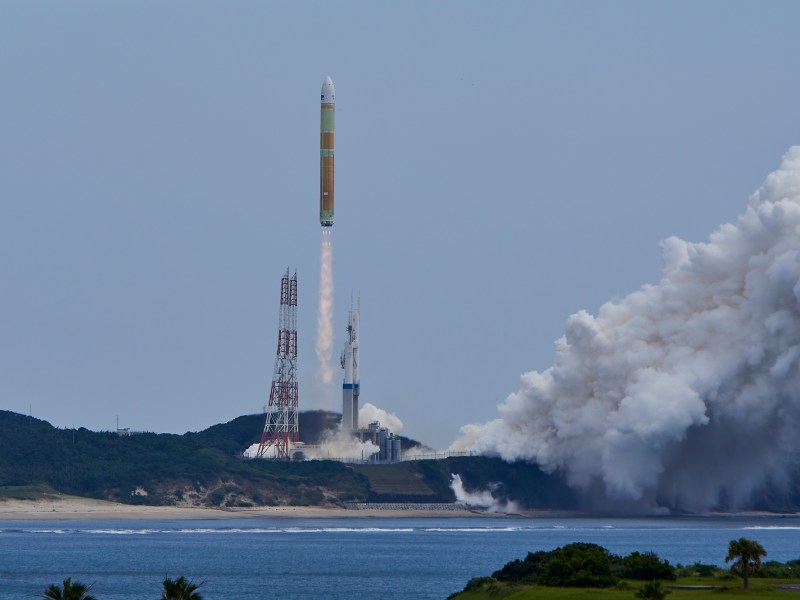
A Japanese H3 rocket lifted off from the Tanegashima Space Center on the morning of June 12, 2026, successfully delivering six satellites into their planned orbits. This marked the rocket first flight since a failure in 2025.
Mission Details
The launch took place at approximately 10:00 AM local time. The H3 rocket carried six satellites with various purposes, including communications, Earth observation, and technology demonstration payloads. All satellites separated successfully and reached their target orbits, completing the mission.
The Japan Aerospace Exploration Agency (JAXA) confirmed after the launch that all rocket systems performed nominally and payload separation was completed as planned.
Background
The H3 rocket is Japan new-generation primary launch vehicle, designed to replace the long-serving H-IIA series. During a 2025 mission, an anomaly in the second-stage engine resulted in the loss of the carried satellite, and the mission was declared a failure.
Following the incident, JAXA established a special investigation committee to conduct a comprehensive analysis of the fault. The investigation identified the problem as originating from the turbopump assembly of the second-stage engine. JAXA subsequently made design modifications and validated the fix through ground testing.
Technical Significance
The successful return to flight holds multiple implications for Japan space program.
From a technical perspective, this success validates the reliability of the fault correction and demonstrates that the H3 rocket design foundation is sound. From an operational standpoint, Japan has restored its independent satellite launch capability, reducing reliance on commercial launch services from other countries.
Additionally, the H3 rocket staged combustion cycle engine and modular design philosophy give it competitive advantages in cost and flexibility, helping Japan capture a larger share of the international commercial launch market.
Future Plans
JAXA has indicated that two to three more H3 launches will be conducted this year, including a government communications satellite and an international cooperation mission. If subsequent missions are equally successful, the H3 rocket will enter routine operational status in 2027.
Meanwhile, JAXA is advancing the development of an upgraded H3 variant, planning to increase payload capacity by adding more solid rocket boosters to meet the demands of heavier payloads.
Source: SpaceNews, Space.com
Date: June 12, 2026
Tags: Launch H3 Rocket JAXA Japan