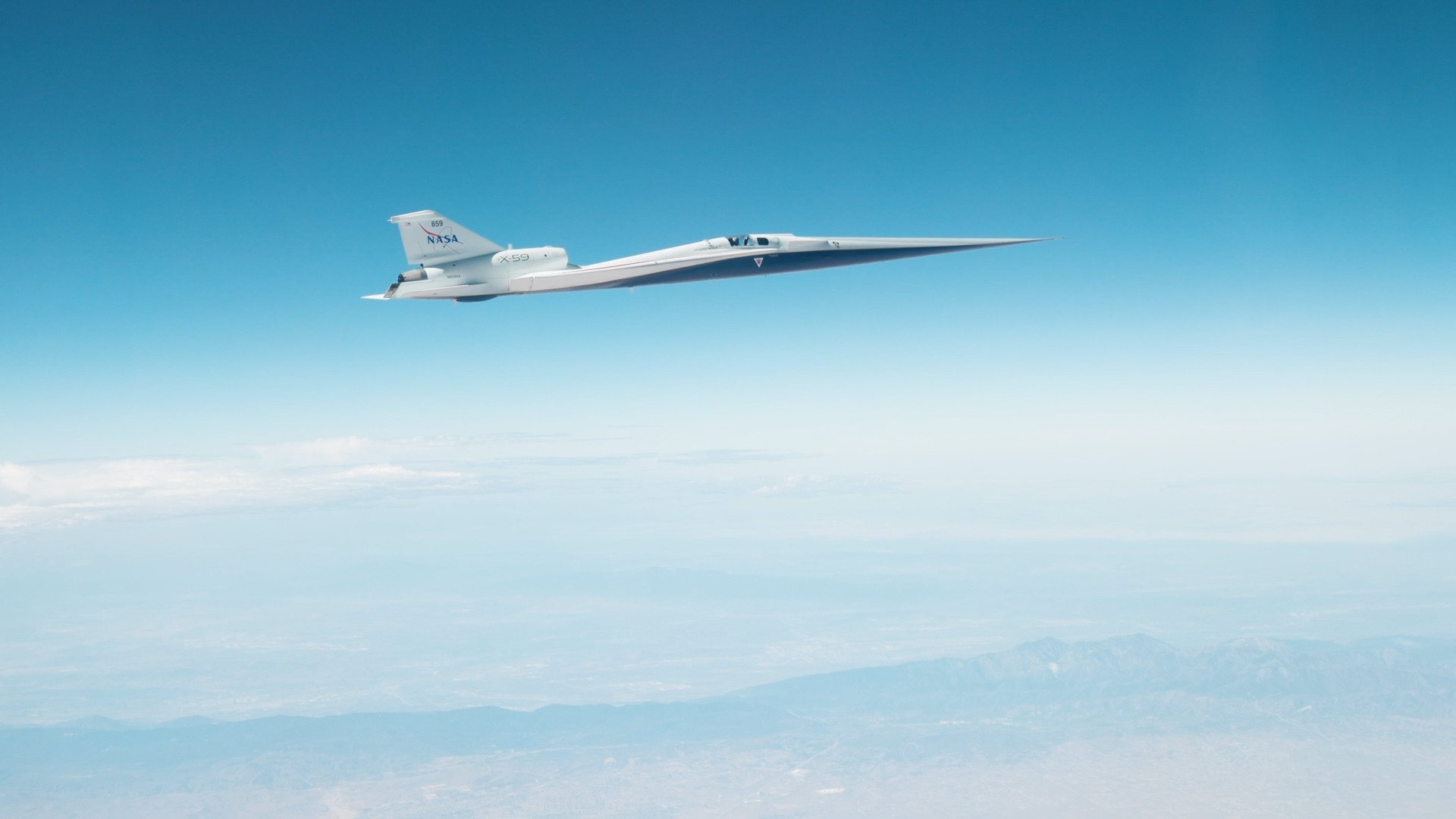
NASA's X-59 quiet supersonic experimental aircraft successfully reached its design mission flight conditions on June 12, 2026 — a target speed of Mach 1.4 (approximately 1,488 km/h) and a target altitude of 55,000 feet (approximately 16.8 km). This marks the most significant milestone since the aircraft's first flight.
Built by Lockheed Martin's Skunk Works, the X-59 features a uniquely elongated nose and top-mounted inlet design, engineered to reduce the traditional thunderous sonic boom to a sound resembling a car door closing.
With mission flight conditions achieved, the X-59 will begin flying over communities in multiple U.S. cities later this year to collect data on public perception of the reduced sonic signature. This data will be submitted to the Federal Aviation Administration (FAA) and the International Civil Aviation Organization (ICAO) to provide a scientific basis for reassessing noise restrictions on commercial supersonic overland flight.
If successful, future commercial aircraft could fly supersonically over land, dramatically reducing transcontinental travel times.