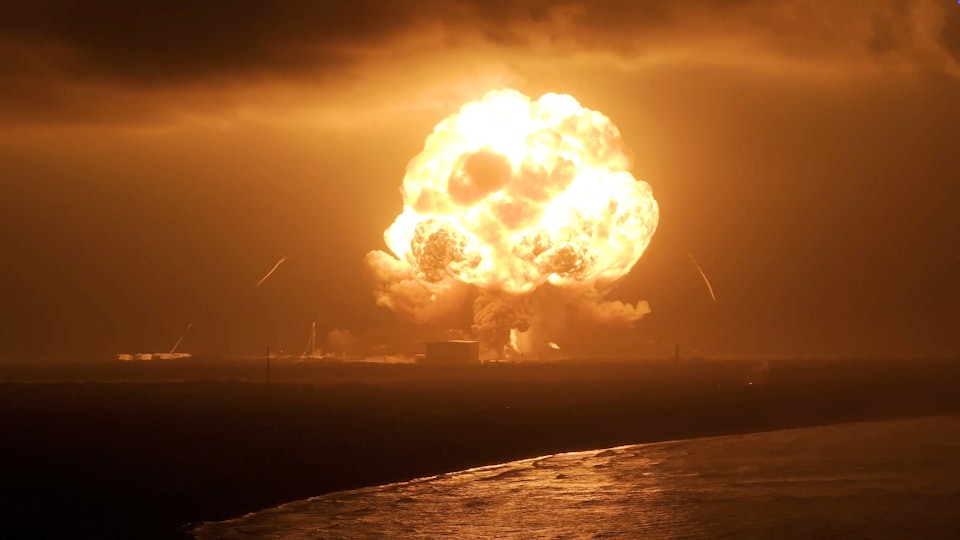
Blue Origin CEO Dave Limp has announced that despite the static fire test explosion on May 28 that destroyed the New Glenn rocket and damaged the LC-36 launch pad, the company aims to complete repairs and resume launches before the end of 2026.
According to Limp, while the rocket and some pad facilities were damaged in the explosion, critical infrastructure was spared — including the propellant storage facilities, liquid oxygen and hydrogen storage tanks, the launch pad umbilical tower (the tower providing fuel, power and data connections to the rocket), and the newly built BE-4 engine hot fire test facility all escaped major damage. Blue Origin is working closely with the Federal Aviation Administration (FAA) on the incident investigation.
The accident has had a direct impact on NASA's Artemis program. New Glenn is tasked with launching the Blue Moon lunar lander into orbit, and the explosion could cause delays to that timeline. Blue Origin states that the New Glenn upper stage testing is progressing well and the company remains confident in its recovery plan.
New Glenn is a heavy-lift launch vehicle that Blue Origin has been developing for years, designed to compete with SpaceX's Falcon Heavy for commercial and government launch contracts. The explosion represents the latest setback for the rocket, but company leadership says it remains committed to this core program.