Upgraded Ariane 6 Rocket Launches 36 Amazon Satellites, Setting New Record
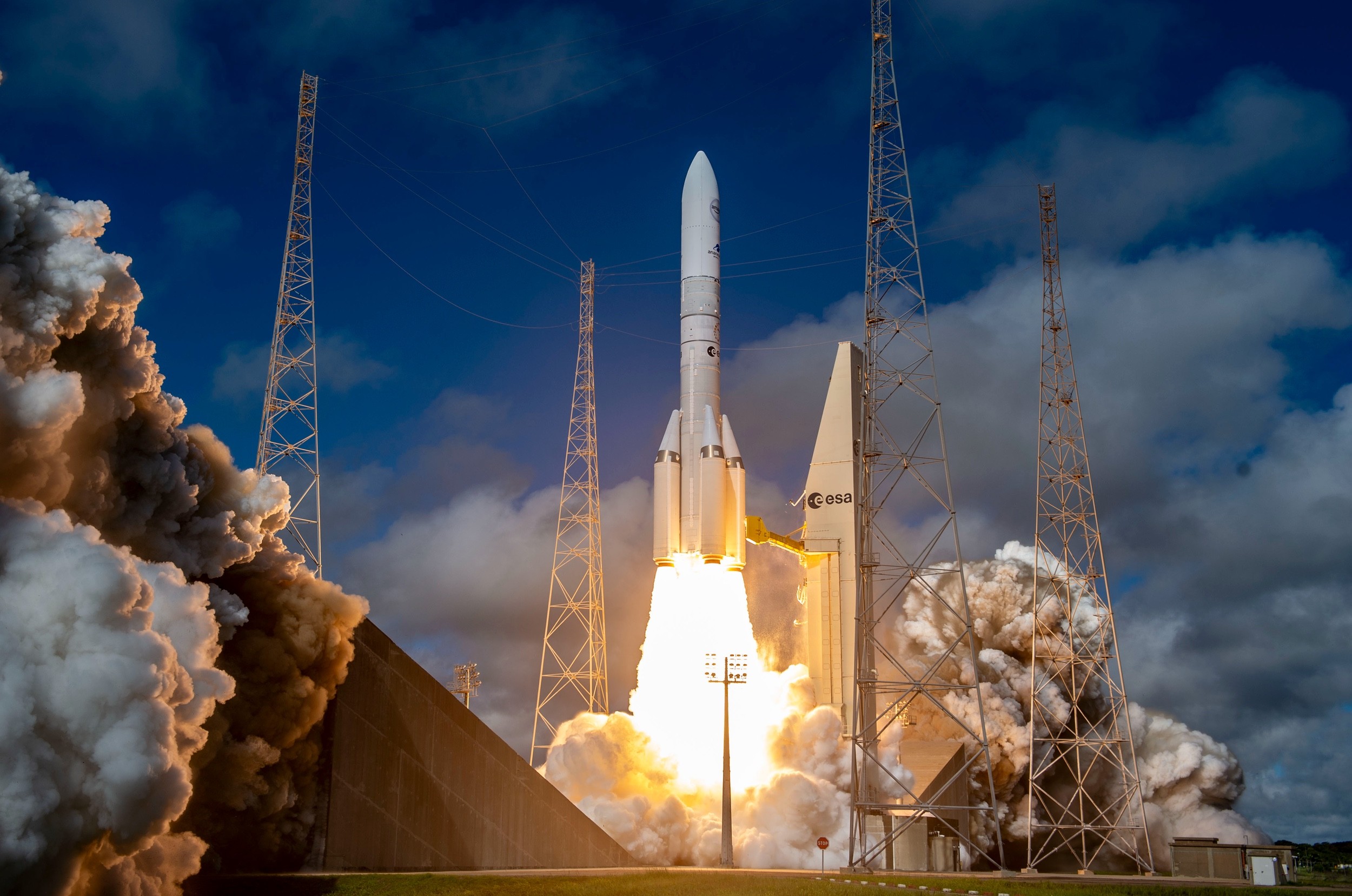
An Ariane 64 rocket equipped with upgraded solid boosters lifted off from Europe's spaceport in Kourou, French Guiana, on June 17, deploying 36 Amazon Leo broadband satellites into low Earth orbit. The mission marked the first flight of the new P160C solid rocket boosters and set a record for the most Amazon Leo satellites launched on a single rocket.
The rocket lifted off at 8:21 a.m. Eastern (20:21 Beijing time), about 30 minutes behind schedule due to an unspecified issue detected roughly a minute before the planned liftoff. The Ariane 6 upper stage began deploying the satellites 1 hour and 26 minutes after launch, completing the process in 25 minutes.
Booster Upgrade Delivers Significant Performance Gains
Designated VA269 by Arianespace and LE-03 by Amazon, this was the third Ariane 6 launch of the year—and the first to use the upgraded P160C solid rocket boosters. The new boosters provide increased thrust compared to the P120C units used on previous missions, boosting the rocket's payload capacity to low Earth orbit by more than two metric tons.
The performance gains translated directly into more satellites per launch. The previous two missions—in February and April—each carried 32 Amazon Leo satellites, while this mission carried 36, setting a new record for the constellation. It was also the heaviest payload ever launched on an Ariane 6.
"With 100 satellites now placed in orbit by Arianespace for Amazon Leo and the launch of four more satellites than the first two missions, we are setting records with an increasingly powerful and versatile launcher," said David Cavaillolès, chief executive of Arianespace. "This further demonstrates our ability to address new markets, and especially constellation deployment."
Amazon Accelerates Constellation Buildout
The launch was the third of 18 that Amazon ordered from Arianespace in 2022. It has become a critical vehicle for deploying Amazon's 3,636-satellite constellation given delays and anomalies with Blue Origin's New Glenn and United Launch Alliance's Vulcan Centaur, two other vehicles with large launch contracts.
So far, 367 Amazon Leo satellites have launched on Ariane 6, Atlas V, and Falcon 9 rockets. However, with only one more Atlas V launch remaining—scheduled for July 3—Amazon will increasingly rely on Arianespace.
"As far as Arianespace, for sure, they definitely have stepped up," said Steve Metayer, vice president of Amazon Leo production operations, during a prelaunch briefing. "They're very reliable on their manifest dates. They're very reliable and safe on their insertions in orbit. So, we definitely would continue to look forward to the next 16 launches with them on our existing contract, and we see them being a player long term beyond that."
ESA Evaluates Higher Launch Cadence
Arianespace expects to reach a peak launch rate of nine to 10 missions per year in 2027. The company had been cautious about expanding beyond that, citing the need for significant infrastructure investments in booster production and launch processing facilities.
However, with growing institutional demand from European governments and potential for additional commercial satellite constellations, Arianespace reopened the case for a higher launch rate last September. Cavaillolès said the company needed to decide by 2027 whether to pursue upgrades to be ready when demand emerges at the end of the decade.
Josef Aschbacher, ESA's director general, revealed at a June 17 briefing that the agency is evaluating scenarios of 12, 15, or 20 Ariane 6 launches per year to determine what infrastructure upgrades would be needed. "They have different price tags and different implementation schedules," he said, adding that clarity is expected before the end of the year.
Aschbacher also noted that ESA is looking at increasing the cadence of Vega C launches and those by four startups that secured funding last year in the European Launcher Challenge: Isar Aerospace, MaiaSpace, PLD Space, and Rocket Factory Augsburg.
Further Reading
https://spacenews.com/upgraded-ariane-6-launches-amazon-leo-satellites/