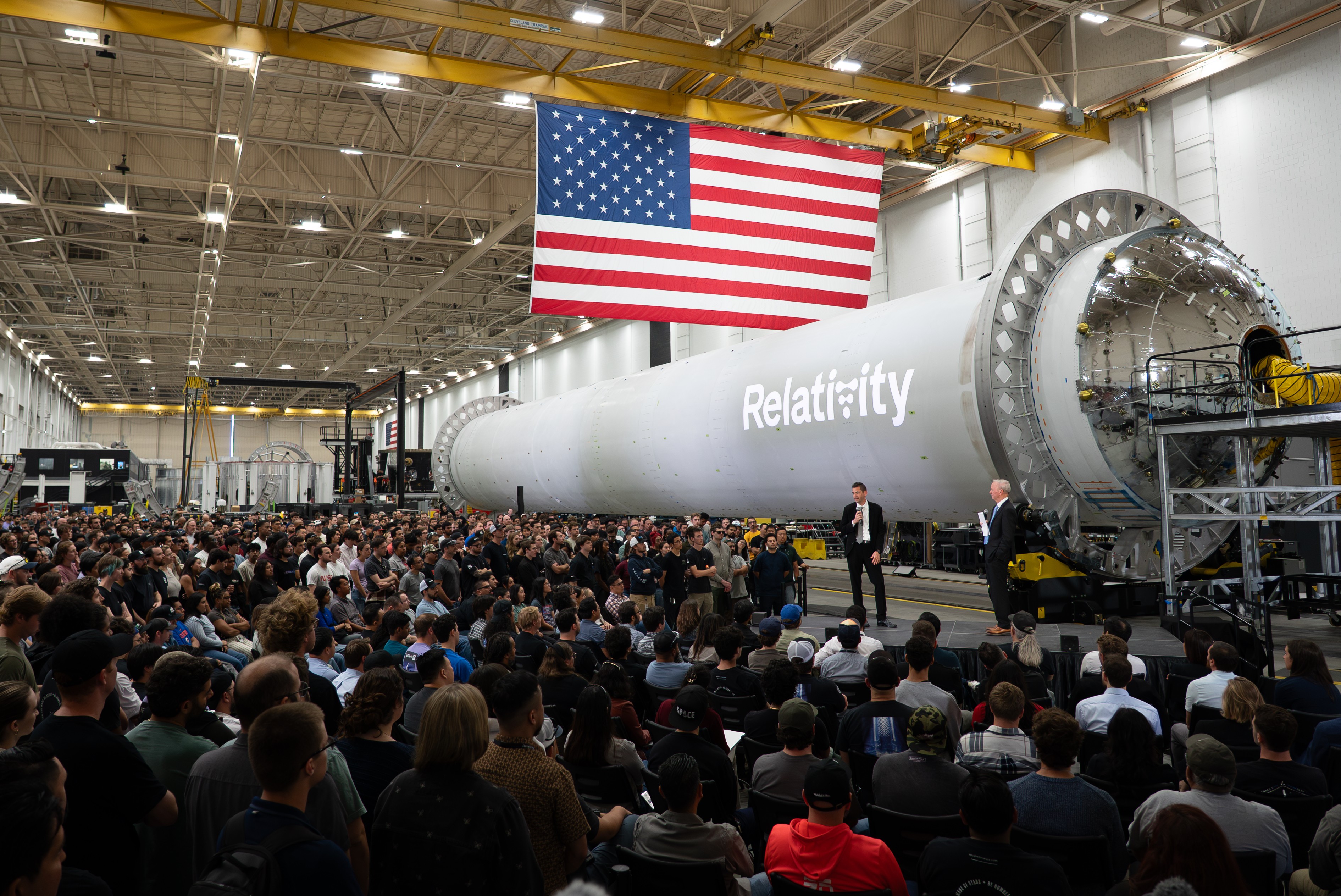
NASA Taps Former Google CEO's Rocket Company for 2028 Mars Atmospheric Mission
On June 17, 2026, NASA announced a six-year reimbursable Space Act Agreement with Relativity Space to build a Mars orbiter and provide launch services for the agency's Aeolus atmospheric science instruments. If the mission launches as planned in 2028, it would become the first private mission to reach Mars.
A new model for public-private partnership
Under this arrangement, NASA will design, build, and integrate the scientific instruments, while Relativity Space handles spacecraft development, the launch vehicle, and cruise operations. "By pairing NASA's world-class instruments with commercial innovation and investment, we can deliver more science, more often, and reduce the time it takes to get essential data into the hands of researchers preparing for future human missions to Mars," said NASA Administrator Jared Isaacman.
The Aeolus payload suite, designed and built at NASA's Ames Research Center, consists of four complementary instruments:
- Doppler Wind and Temperature Sounder (DWTS-Ozone): Measures wind and temperature profiles from the surface up to approximately 60 kilometers in altitude.
- Thermal Limb Sounder (TLS): Provides vertical temperature profiles along with observations of dust and water-ice clouds.
- Surface Radiometric Sensor Package (SuRSeP): Measures surface energy balance, dust, and cloud properties.
- Wide-Field Context Camera (WFCC): Captures daily global images of atmospheric activity.
Together, these instruments will deliver the first integrated, daily, global view of Martian winds, temperatures, dust, and clouds — data that directly informs entry, descent, and landing systems for future crewed and uncrewed Mars missions.
A rocket company that has never reached orbit
Relativity Space was founded in 2015 with a focus on 3D-printed rockets. Its first vehicle, Terran 1, failed during its debut launch in March 2023 and never reached orbit. The company pivoted to a larger design, the Terran R.
In 2025, former Google CEO Eric Schmidt acquired a majority stake in the company and installed himself as CEO, rescuing it from fundraising difficulties. The Aeolus mission represents a high-stakes bet: Relativity must design and build a spacecraft and complete the Terran R rocket in under two years. If successful, it would achieve two milestones at once — the first private Mars mission and the deep-space debut of the Terran R.
NASA is also taking on risk. Past partnerships with startups have ended in bankruptcy or awkward landings. But the model allows the agency to expand its mission cadence without bearing all the financial risk.
Building on decades of Mars atmospheric science
Aeolus builds on more than two decades of NASA missions studying the Martian atmosphere, including MAVEN, the Mars Reconnaissance Orbiter, and Mars Odyssey. What sets Aeolus apart is its ability to provide multi-parameter, integrated, daily global atmospheric observations — a capability no previous mission has offered.
NASA will operate the science instruments for at least one Martian year (approximately 687 Earth days) and will develop the data-processing pipeline to transform raw measurements into ready-to-use products for the broader scientific community.
Further reading
- Original article: NASA picks Eric Schmidt's rocket company for Mars mission, setting up a race with SpaceX
- NASA press release: NASA Announces Public-Private Partnership to Advance Mars Science