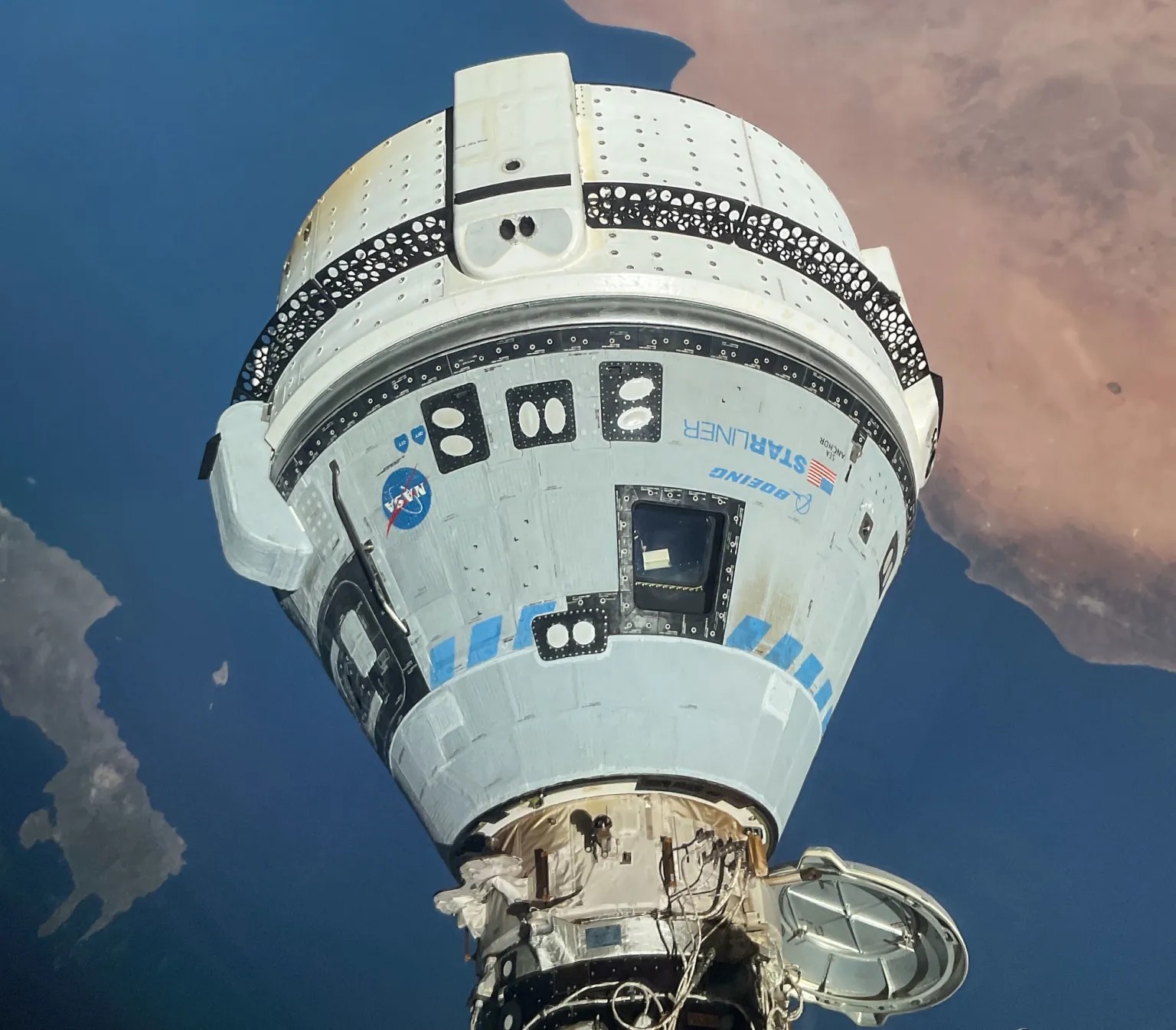
Boeing Starliner Return to Flight Still Uncertain, NASA Safety Panel Says
WASHINGTON — NASA's Aerospace Safety Advisory Panel (ASAP) indicated on June 22 that Boeing's CST-100 Starliner commercial crew vehicle may not fly again for up to a year, despite ongoing progress in addressing technical issues.
Background
The Starliner is Boeing's crew spacecraft developed under NASA's Commercial Crew Program. In June 2024, the vehicle conducted its Crew Flight Test (CFT), carrying NASA astronauts Suni Williams and Butch Wilmore to the International Space Station.
However, the spacecraft experienced thruster failures during its approach to the station. After months of analysis, NASA concluded it was unsafe for Starliner to return with crew aboard. The vehicle made an uncrewed return in September 2024, while Williams and Wilmore remained on the ISS until March 2025, returning aboard a SpaceX Crew Dragon.
Investigation Findings
In February 2025, NASA released an independent report from the Program Investigation Team (PIT). The report identified flawed decision-making and leadership during the mission and recommended categorizing the flight as a "Type A" mishap — NASA's most serious classification. NASA accepted the recommendation.
Since the report's release, neither NASA nor Boeing has provided significant updates on correcting technical problems or implementing recommendations. At a May 2025 briefing about a SpaceX cargo mission, NASA said launch plans for Starliner-1 "remain under review as teams continue working through technical issues."
Current Status
"Teams continue to work through technical issues from CFT and address actions from the PIT report," said Kent Rominger, a former astronaut and ASAP member, at the June 22 panel meeting.
He reported that integrated Boeing and NASA teams have closed 72 observations from the CFT mission and 22 of the 28 in-flight anomalies. However, major issues — including failures of reaction control system thrusters in the service module and heating of "doghouses" containing the thrusters — "remain constraints for Starliner-1."
Rominger also noted progress on organizational changes, including leadership transitions and direct coordination between Boeing and NASA mission managers. "There's a renewed focus on improving trust and communication between NASA and Boeing," he said.
Launch Timeline
The uncertainty contrasts with optimism earlier in the year. In early February, before the PIT report's release, NASA officials suggested Starliner-1 could launch as soon as April. By May, the agency indicated it was unclear whether the mission could launch this year, citing limited ISS schedule opportunities.
Susan Helms, ASAP chair, reiterated that no formal launch date has been set for Starliner-1, but said the mission would occur "in the next year or so."
Future Outlook
Despite schedule uncertainty, ASAP members received assurances from NASA and Boeing that the company intends to fly the spacecraft again and obtain crewed mission certification.
"NASA and Boeing continue working toward the goal of Starliner's crewed certification, which includes defining what is needed and acceptable for the next uncrewed mission to reduce risk and confirm readiness for crewed missions," Rominger said.
He added that the panel met with Don Ruhmann, Boeing's chief aerospace safety officer, who "emphasized Boeing's commitment to NASA and Starliner."
Meanwhile, NASA is preparing contingencies. In a procurement filing last month, the agency announced plans to add six flights to SpaceX's commercial crew contract, citing "technical issues and schedule delays encountered by Boeing." The additional SpaceX flights would cover projected ISS operations through its scheduled retirement in 2030.
Read More
Original article: https://spacenews.com/nasa-and-boeing-still-uncertain-about-when-starliner-will-return-to-flight/